The Rise of Self-Service Kiosk Technolgy in Australian Restaurants
Australia’s restaurant industry is evolving rapidly. With rising labour costs, increasing customer expectations, and the need for seamless service, many venues are now turning to technology to bridge the gap.
One of the biggest game-changers? The self-ordering kiosk. Once only seen in fast-food chains, self-service kiosks are now being adopted by independent restaurants, cafes, and even food trucks across the country. And for good reason—they’re efficient, reliable, and provide a better ordering experience for customers.
So how can Australian restaurateurs implement kiosk machines without breaking the bank or compromising their brand? This guide breaks it all down.
What Is a Self-Ordering Kiosk?
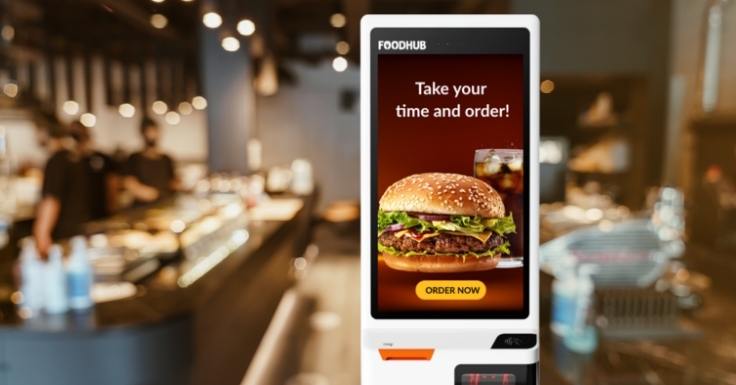
A self-ordering kiosk is a digital touchscreen system that allows customers to browse the menu, place orders, customise their items, and make payments—without needing to interact with a staff member.
You’ve likely seen them at McDonald’s or airport food courts. But these systems are now becoming common in small venues across Melbourne, Sydney, Brisbane, and beyond.
They typically consist of:
- A touchscreen interface (standalone or wall-mounted)
- Menu integration with your POS or kitchen display
- Payment processing (card, digital wallets, sometimes cash)
- Optional receipt printer or order number display
Why Are More Restaurants Choosing Self-Service Kiosks?
The demand for self-service kiosks in Australia is driven by a combination of operational needs and consumer behaviour.
Here’s why restaurants are making the switch:
1. Labour Efficiency
Staff shortages are a growing concern in hospitality. A self-ordering kiosk can take on repetitive front-of-house tasks—like taking orders or handling basic queries—freeing up staff to focus on food prep, table service, or customer engagement.
2. Faster Service During Peak Hours
With multiple ordering kiosks, you can process more customers at once, reducing queue times and avoiding bottlenecks at the till.
3. Improved Order Accuracy
Because customers place their own orders, there’s less room for miscommunication. Modifications are handled visually, which reduces human error and wasted food.
4. Increased Upselling Opportunities
Kiosk machines can be programmed to suggest add-ons—like sauces, sides, or drinks—at the right time in the ordering flow. This leads to higher average order values without your staff needing to do a hard sell.
5. Better Customer Experience
Younger audiences, in particular, enjoy the independence and privacy of ordering via a screen. It allows them to take their time, explore the menu, and feel more in control.
What to Consider Before Installing a Self-Ordering Kiosk
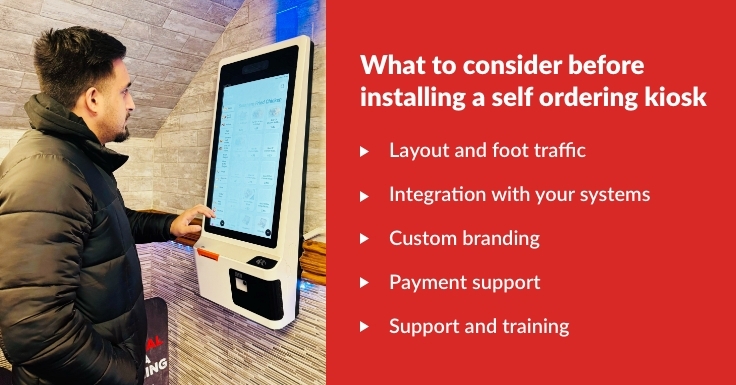
Not all kiosk machines are created equal. Before jumping in, it’s essential to assess your venue, customer flow, and long-term tech goals.
1. Layout and Foot Traffic
Do you have the physical space to install one or more kiosks? Make sure screens are positioned logically—ideally in the path of entry or near the counter.
2. Integration with Your Systems
Your self-ordering kiosk should connect seamlessly with your POS, kitchen printers, and inventory systems. If it doesn’t, you’ll end up creating more work instead of saving time.
3. Custom Branding
Look for systems that allow you to reflect your restaurant’s look and feel. A custom-designed interface builds trust and ensures brand consistency.
4. Payment Support
Make sure your kiosks accept a range of payment methods—from cards and mobile wallets to contactless. In some areas, supporting cash may still be useful.
5. Support and Training
Choose a provider that offers onboarding, staff training, and technical support. Your team needs to feel confident using the system—especially during busy periods.
How Kiosk Machines Enhance Takeaway and Dine-In Experiences
Kiosks aren’t just for fast food chains. They work well for:
- Fast-casual dine-in: Let customers order at the screen, find a table, and wait for table service or collection.
- Takeaway: Streamline the process during lunch rushes—especially if you serve office workers or commuters.
- Food courts: Kiosks reduce staff dependency in high-traffic environments and keep orders flowing smoothly.
They can also be used in hybrid formats—such as a front-facing ordering kiosk for customers, with staff tablets for in-house ordering or adjustments.
Kiosks and Mobile Ordering: A Winning Combo
A smart self-ordering kiosk setup doesn’t work in isolation. The best approach is to pair kiosk orders with mobile ordering and EPOS systems that share the same backend. That way, you’re creating a consistent customer experience—whether someone’s ordering at the screen, on their phone, or through your website.
Foodhub’s integrated platform allows Australian restaurants to run kiosk ordering alongside takeaway, delivery, and table service—all connected in real time.
Real-World Data: Self-Service Kiosks Boost Sales, Clarity, and Speed
Plenty of global quick-service restaurant (QSR) chains have seen a genuine uplift in revenue—and Australia is no exception. Here are the most relevant insights:
➤ 30% increase in average order value
A recent study by Restroworks found that implementing self-service kiosks yields a 10–30% rise in average order value across QSR and fast-casual venues (https://www.restroworks.com/blog/self-ordering-kiosk-restaurant-statistics-2025/)
➤ Over one-third of orders via kiosks at Red Rooster
Red Rooster, a major Australian chicken QSR chain, reported that as many as 35% of in-store orders are now placed through kiosks—leading to smoother counter flow and better staff efficiency. (https://www.kioskmarketplace.com/articles/self-order-kiosk-complements-australia-qsrs-store-of-the-future/).
➤ 40% faster order processing
Abacus reports suggest that kiosks reduce ordering time by nearly 40% versus traditional staff interaction—speeding up service and allowing staff to focus on food quality. (https://abacus.co/blog/how-self-ordering-kiosks-increase-roi-case-study/).
➤ 78% of customers prefer kiosk ordering
According to a Square “Future of Commerce” survey covering Australia, the UK, US, and Canada, 78% of dining consumers said they would prefer to use a kiosk if available. (https://squareup.com/us/en/press/2024-future-of-commerce-us).
What This Means for Australian Hospitality
- More revenue per customer: Elevated order values and more frequent up-sells mean every visitor and every order becomes more valuable.
- Improved staff efficiency: With ordering being automated, trained staff can focus on faster food prep and a better in-person experience.
- Stronger customer satisfaction: Fewer errors, quicker service, and a preference for digital ordering all drive repeat visits.
How to Replicate This Success in Your Venue
To enjoy the same benefits Australian QSRs are seeing, you need to ensure that your kiosk deployment includes:
- Menu optimisation: Highlight toppings, add-ons, and upsell prompts at key moments.
- Integration with EPOS & kitchen workflows: Orders should flow directly, accurately, and in real time.
- Strategic placement: Position screens at main traffic areas where customers make decisions.
- Support and guidance: Staff presence during launch helps customers adopt kiosks confidently.
Foodhub’s Role in Smarter Kiosk Solutions
If you're exploring self-service kiosks, Foodhub offers:
- Branded kiosk setups with upsell tools and workflow logic
- Seamless integration with EPOS, kitchen display, and inventory systems
- Australian-based support for smooth staff training and system roll-out
- Transparent pricing—no hidden fees, just clear value
The data is compelling: self-service kiosks aren’t just a trend—they’re a solid investment with proven returns. From larger orders to faster service and happier customers, the numbers speak for themselves.
Want to Bring This Level of Service and Efficiency to Your Restaurant?
Partner with Foodhub to explore affordable, integrated kiosk solutions built with Australian venues in mind.