Food Presentation: Simple Ways to Make Dishes More Memorable
Food presentation is the art of modifying, processing, arranging, or decorating food to enhance its visual appeal. In a competitive UK market, how a dish looks is often just as important as how it tastes because it forms the customer's very first impression.
Research in gastrophysics suggests that the visual appearance of a meal can actually change the way our brains perceive flavour, making a well-presented dish taste better to the average guest.
By mastering a few simple techniques in food presentation, you can justify higher price points, improve customer satisfaction, and encourage diners to share your work on social media. Now, let’s dive into the core principles of culinary arrangement and see how you can make your menu truly unforgettable.
The Art of the First Bite
The concept of visual hunger explains why customers often feel like they are eating with their eyes long before they pick up a fork.
When a beautifully arranged plate arrives at a table, or a neatly packed box is opened at home, the brain releases dopamine in anticipation of a reward. This psychological response means that your food presentation is a vital part of the overall dining experience. It sets a standard for quality and tells the customer that the kitchen takes pride in its work.
Professional food plating and presentation involve a careful balance of colour, texture, and structural arrangement. It is not just about making things look pretty; it is about creating a functional layout that makes the meal easy and enjoyable to eat.
A plate that is too cluttered can be overwhelming, while one that is too sparse might make a guest feel like they are not getting good value for their money. Finding the middle ground is the key to a professional finish.
Improving your presentation does not necessarily require expensive or rare ingredients. Often, it is about using the elements you already have in a more intentional way. By considering the placement of each component, you can turn a standard meal into a premium experience. This attention to detail is what separates a basic takeaway from a top-tier restaurant in the eyes of the modern consumer.
The Plate as a Canvas: Choosing Your Foundation
Before you begin arranging food, you must consider the plate itself as the foundation of your artwork. The size of the plate is a critical factor in how the portion size is perceived by the guest.
If a plate is too large, even a generous portion can look small and lonely, leading to poor value perception. Conversely, a plate that is too small can look crowded and messy, making the food difficult to eat without causing a spill.
Colour contrast is another essential element when choosing your tableware. Many professional chefs prefer a classic white plate because it acts as a neutral background that makes vibrant, colourful ingredients pop.
However, dark stoneware or slate plates are becoming increasingly popular for creating a rustic or premium feel. Darker plates can be particularly effective for highlighting light-coloured foods like pasta with cream sauce or grilled white fish.
The rim of the plate acts as a natural frame for your culinary creation. It is a general rule in the culinary arts that the rim should remain clean and free of food or garnishes. This creates a clear boundary that keeps the focus on the centre of the dish. When the food stays within this frame, the overall presentation looks more organised and professional.
The Rule of Odds and Compositional Balance
Composition is the way different elements are arranged on the plate to create visual interest. One of the most effective techniques used in graphic design and the culinary arts is the Rule of Odds.
This theory suggests that the human eye finds odd numbers, such as three, five, or seven, more aesthetically pleasing than even ones. When plating food items like scallops, prawns, or asparagus spears, try to group them in odd numbers to create a more dynamic look.
For beginners, the Clock Method is a reliable way to ensure a balanced arrangement. Imagine the plate is a clock face and place your protein at the 2 o'clock position. Your starches, like potatoes or rice, should go at the 10 o'clock position, and your vegetables should fill the space at 6 o'clock. This traditional layout ensures that the most expensive part of the meal is prominent while maintaining a neat and logical structure.
Using white space is another important aspect of compositional balance. White space is the empty area on the plate that is not covered by food.
Resisting the urge to cover every square inch of the porcelain creates a high-end feel and allows the guest to appreciate the individual components of the meal. A plate that has room to breathe feels more sophisticated and expensive than one that is piled high with food.
Building Up, Not Out: The Power of Height
Adding height to a dish is one of the fastest ways to make it look professional and luxurious. Instead of spreading all the components flat across the plate, try to stack them to create structural interest.
This technique, often called architecture on the plate, makes the portion look more substantial and impressive. It also allows you to fit more elements into a smaller space without making the plate look cluttered.
Layering textures is a great way to incorporate height while improving the eating experience. For example, you might place a piece of crispy pan-seared salmon on top of a bed of soft, creamy mashed potatoes.
This creates a vertical stack that is visually interesting and provides a satisfying contrast in every bite. Placing a light garnish, like a bunch of fresh herbs, on the very top of the stack adds a final touch of height and elegance.
There are specific tools that can help you achieve this structural precision. Ring moulds are excellent for creating neat, tall towers of rice, tartar, or vegetables. Squeeze bottles allow you to place dots or lines of sauce with pinpoint accuracy, which can help support the taller elements of the dish. By building up rather than out, you create a sense of volume that delights the customer's eye.
Colour Theory in Cooking: Making Plates Pop
A meal that is all one colour is rarely exciting to look at. A monochromatic plate, such as fried chicken served with mashed potatoes and cauliflower, can look bland and unappealing even if it tastes delicious.
The Rainbow Rule suggests that a visually stunning dish should include a variety of contrasting colours. Natural vibrancy is your best tool here, as bright vegetables and fresh herbs can instantly lift the visual profile of a meal.
You can use colourful ingredients to draw the eye toward the centre of the plate. A bright red pepper coulis or a vibrant green pea purée can act as a beautiful base for a neutral-coloured protein. Small additions, like a sprinkle of purple radish sprouts or orange citrus zest, can provide the final "pop" of colour that makes the dish memorable. These small touches show the guest that you have put thought into every element of their meal.
Seasonal palettes are also a great way to connect your food presentation with the time of year. In the summer, you might focus on bright, fresh colours like yellow corn, red berries, and green cucumbers. In the winter, you can shift toward deeper, earthier tones like purple beetroot, orange carrots, and dark leafy greens. Matching your colours to the season makes the meal feel more relevant and helps you utilise the freshest local produce.
The Unboxing Experience: Presentation for the Delivery Era
In the modern UK takeaway market, your food presentation must be able to survive a journey in a box. The unboxing experience is the first interaction a delivery customer has with your food, and it should be a "wow" moment.
Since you cannot arrange food on a porcelain plate, you must use the boundaries of the container to your advantage. Neatly layering ingredients in a box can create a professional look that justifies the price of the meal.
Branded touchpoints are a powerful way to elevate the delivery experience. Using bespoke greaseproof paper with your logo or a simple "thank you" sticker on the lid makes the order feel more personal and high-end. These small details show that you care about the customer's experience even after the food leaves your kitchen. It turns a standard delivery into a branded event that helps build customer loyalty.
The reveal is the most important part of the delivery process. When the customer opens the lid, the food should still look vibrant and fresh.
Using colourful ingredients and fresh herbs is just as important in a box as it is on a plate. If the food looks like it has been thrown together carelessly, the customer will perceive it as lower quality, regardless of how it actually tastes.
Structural Integrity: Presentation That Survives the Journey
One of the biggest challenges for a UK takeaway owner is the 15-minute moped test. This refers to the time it takes for a driver to transport an order from your shop to the customer's door.
During this time, the food is subject to vibration, heat, and movement. Your food presentation must be structurally sound enough to ensure that the meal does not slide into a messy pile before it arrives.
A deconstructed approach can be a very effective way to maintain the quality of the presentation. Instead of pouring a heavy sauce over a crispy item, send the sauce in a separate pot. This prevents the food from becoming soggy and allows the customer to finish the presentation themselves at home. You can also send delicate garnishes, like fresh herbs or crunchy nuts, in small containers so they remain fresh and vibrant.
Managing steam is another critical factor for maintaining visual appeal during delivery. If a hot meal is sealed in an airtight plastic container, the steam will condense and turn crispy food into a soggy mess.
Choosing packaging with small vents or using cardboard boxes that allow the food to breathe will help maintain the texture and appearance. A dish that keeps its structural integrity will always provide a better experience for the customer.
The Instagram Factor: Designing for the Digital Lens
Social media has changed the way we think about food plating. Many customers will now take a photo of their meal before they start eating, which provides free marketing for your business. To take advantage of this, you should design your dishes with the digital lens in mind. This means focusing on elements that photograph well, such as distinct textures and glossy sauces.
Designing for the drip or the cheese pull is a great way to encourage social sharing. For example, a burger with perfectly melted, dripping cheese or a dessert with a warm chocolate sauce pour is highly "Instagrammable." These visual moments are exciting for customers to capture and share with their followers. The more visually interesting your dish is, the more likely it is to be seen by potential new customers online.
You should also look for subtle ways to include your branding in the frame of a photo. A branded napkin, a logo on a burger pick, or a unique plate design can help people identify your restaurant when they see the photo on their feed. This turns your food presentation into a powerful customer relationship management tool that expands your reach in the local community.
Garnishing with Purpose: Moving Beyond Parsley
A garnish should never be an afterthought or a random addition to the plate. The most important rule in professional plating is the edible-only rule.
You should never put something on a plate that is not meant to be eaten, such as a large branch of raw rosemary or a non-edible flower. Every element on the plate should contribute to the overall flavour and texture of the meal.
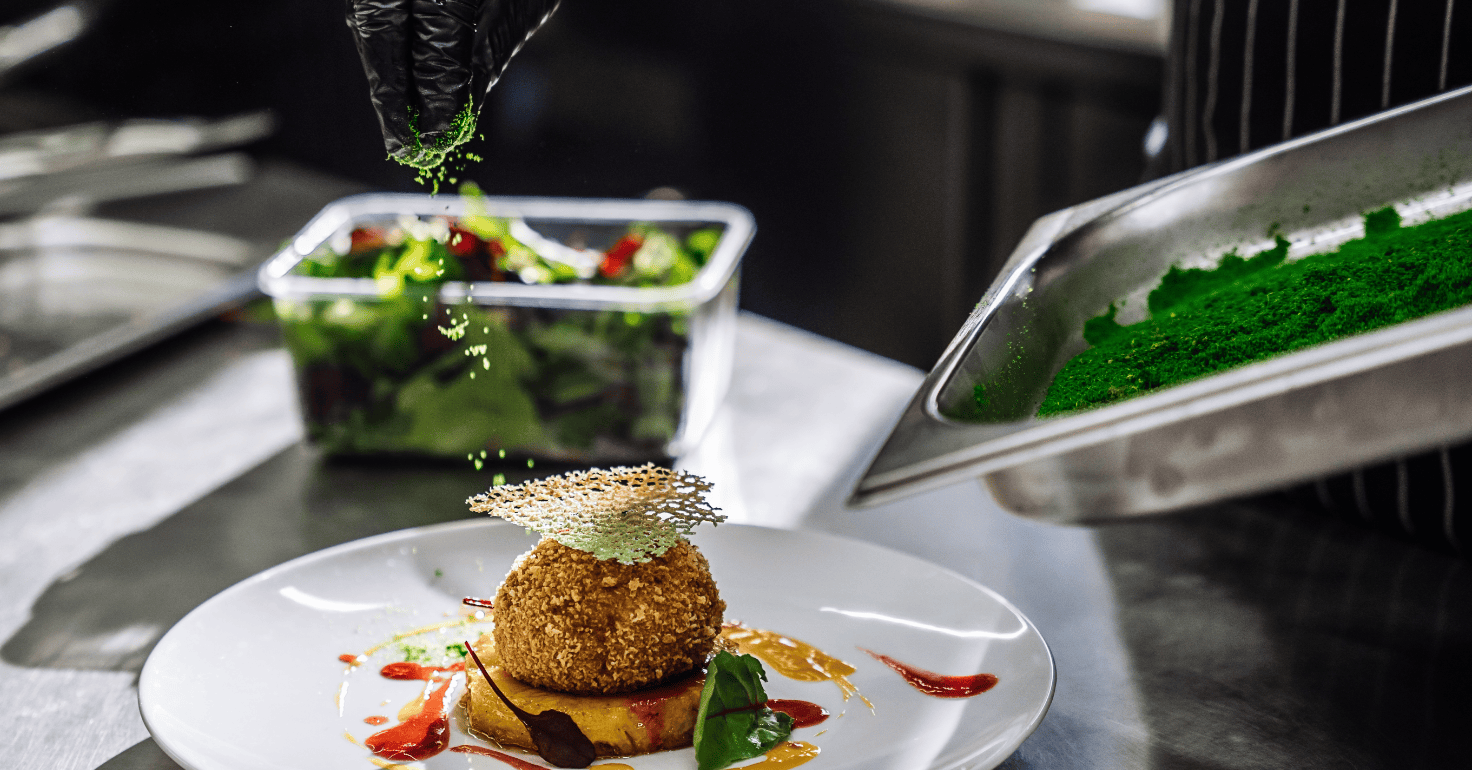
Micro-greens and edible flowers are popular ways to add a high-end touch with very little effort. These tiny plants offer a burst of colour and a delicate flavour that can complement many different types of cuisine. A small sprinkle of micro-coriander or a few pansy petals can make a simple salad or a piece of grilled meat look like it came from a fine dining kitchen.
Using powders and oils is another professional culinary technique that adds a clean finish to a dish. A drizzle of herb oil or a light dust of smoked paprika adds visual interest and a concentrated burst of flavour. These elements allow you to add colour and detail without taking up a lot of space on the plate. They are the final pass that tells the customer they are about to eat a high-quality, professional meal.
The Clean Edge Policy: Attention to Detail
The final step in professional food presentation is a commitment to cleanliness. A single stray thumbprint on the rim of a plate or a sauce smudge on the edge of a takeaway box can ruin the entire presentation.
Before a dish leaves the kitchen, it should undergo a final inspection to ensure the edges are pristine. Most professional chefs keep a clean cloth nearby to wipe down the rims of every plate before they are served.
Consistency is the other half of the clean edge policy. Every plate that leaves your kitchen should look exactly the same, whether it is the first order of the day or the fiftieth on a busy Saturday night. This level of detail shows the customer that your business is reliable and that you have high standards for your work. When guests know they can expect the same beautiful presentation every time, they are more likely to become regulars.
Ensuring that the packaging is also clean is vital for delivery orders. Grease stains on the outside of a box or a leaking sauce pot can make the whole order feel unhygienic.
Proper food preparation includes choosing the right containers and making sure they are sealed correctly. A clean and tidy presentation builds trust and makes the customer feel safe eating your food.
Consistency and Training: Plating as a System
To maintain a high standard of food presentation, you must treat it as a repeatable system rather than a one-off effort. This starts with creating a spec sheet for every dish on your menu.
A spec sheet should include a high-quality photo of the perfect plate and a short list of instructions on how to arrange the components. This ensures that every staff member, from the head chef to the newest trainee, knows exactly what is expected.
Finding the balance between speed and beauty is one of the biggest challenges in a busy QSR or takeaway environment. During a peak rush, it is tempting to rush the plating process to get orders out faster.
However, a well-organised station and clear training can help your team work quickly without sacrificing the look of the food. If every person in the kitchen knows their role in the presentation process, the final result will be much more consistent.
The person at the final station, often where the food is packed or placed on a tray, is the most important editor of your food’s story. They are the last person to see the meal before it reaches the customer. They should be empowered to send a dish back if it does not meet your standards for food presentation. This final check is the most effective way to protect your brand's reputation for quality.
Making Every Meal Memorable
Great food presentation is about more than just expensive ingredients or complex garnishes; it is about care and intention. When you take the time to arrange a meal thoughtfully, you are telling your customers that their experience matters to you. This attention to detail builds a strong connection between your brand and your guests, leading to better reviews and more repeat business.
The long-term value of investing in your plating and presentation is clear. It improves the perceived value of your food, which allows you to maintain healthy profit margins. It also turns your customers into brand ambassadors who share photos of your beautiful dishes with their friends and family. In a world where people eat with their eyes first, the look of your food is a critical part of your success.
By following the simple techniques outlined in this guide, such as using the Rule of Odds or adding height to your dishes, you can elevate your menu today.
Whether you are serving a full-service dining room or a busy takeaway, these principles will help you stand out. Remember that every meal you serve is an opportunity to leave a lasting, positive impression on your customers.
Showcase Your Best Work with Foodhub for Business
There is a direct link between how your food looks and how well it sells on a digital platform. When potential customers browse the Foodhub app, they are making decisions based on the photos they see.
High-quality food presentation helps your dishes stand out from the competition and encourages more people to click "order." Showcase your most memorable plating to thousands of local customers through your own branded website and app.
Foodhub for Business provides the smart POS technology you need to connect your beautiful dishes with hungry customers. Our platform allows you to upload professional photos and manage your orders with ease, all while benefiting from our low-commission model.
We help you streamline your operations so you can focus on what you do best: creating incredible food. Interested speak with Foodhub for Business today.