.jpg)
Restaurant Email Marketing Ideas That Actually Work in 2026
For UK restaurants, email remains one of the most powerful ways to reach customers directly.
In a world dominated by social media algorithms and fleeting attention, a well-crafted email lands in the inbox, not lost among countless posts or ad bids.
With the right restaurant marketing strategy, email helps strengthen customer relationships and drive consistent orders. Below are proven ideas and best practices to build a strong restaurant email marketing approach in 2026.
Why Email Marketing Still Works for Restaurants
Email marketing remains a reliable way for restaurants to connect directly with customers.
Unlike social platforms where algorithms limit reach, emails land straight in diners’ inboxes, making communication more direct and consistent.
- Many diners prefer receiving offers, discounts, and updates by email, especially when messages are relevant and sent at the right time.
- Email marketing is cost-effective. Restaurants can promote special deals, events, or menu launches without ongoing ad spend, especially when using customer data.
- Restaurants have full control over when campaigns are sent and what content customers see, helping maintain consistent communication and build stronger customer relationships.
Because of these advantages, email continues to play an important role in modern restaurant marketing strategies.
Email Campaigns That Deliver for Restaurants
Here are some of the most effective types of emails restaurants should consider — all based on real-world examples and industry guidance.
1. Welcome Email for New Subscribers
When someone signs up to your mailing list, whether through your website, booking system, or in-store, send a warm welcome email to introduce them to your brand. This first touchpoint sets the tone.
A welcome email can:
- Thank them for joining
- Share a short restaurant story or your values
- Offer a small incentive (e.g., discount on first order, free side with first in-house visit)
- Show menu highlights or upcoming specials
Restaurants using a structured welcome sequence see significantly higher engagement: one source reports 50-60 % open rates compared to standard campaigns. This early positive impression can turn a curious visitor into a regular.
2. New Menu or Seasonal Offer Announcements
Use email to highlight new dishes, seasonal menus, or limited-time offers. For example, switching to a lighter summer menu or launching a festive holiday selection offers perfect hooks.
Good practice here: include mouth-watering photos, brief appetising descriptions, and a clear call to action (book now / order online).
3. Special Promotions, Discounts, and Limited-Time Deals
Promotions catch attention, especially if customers believe the offer is short-lived.
Ideas for offers:
- Mid-week lunch specials
- Early-bird discounts for dine-in or online orders
- Two-for-one deals on soft drinks or desserts on quiet nights
- Shareable bundles or meal kits for families
These kinds of mailers work particularly well for takeaways, deliveries, and casual dining venues during slower sessions.
4. Event and Occasion-Based Emails
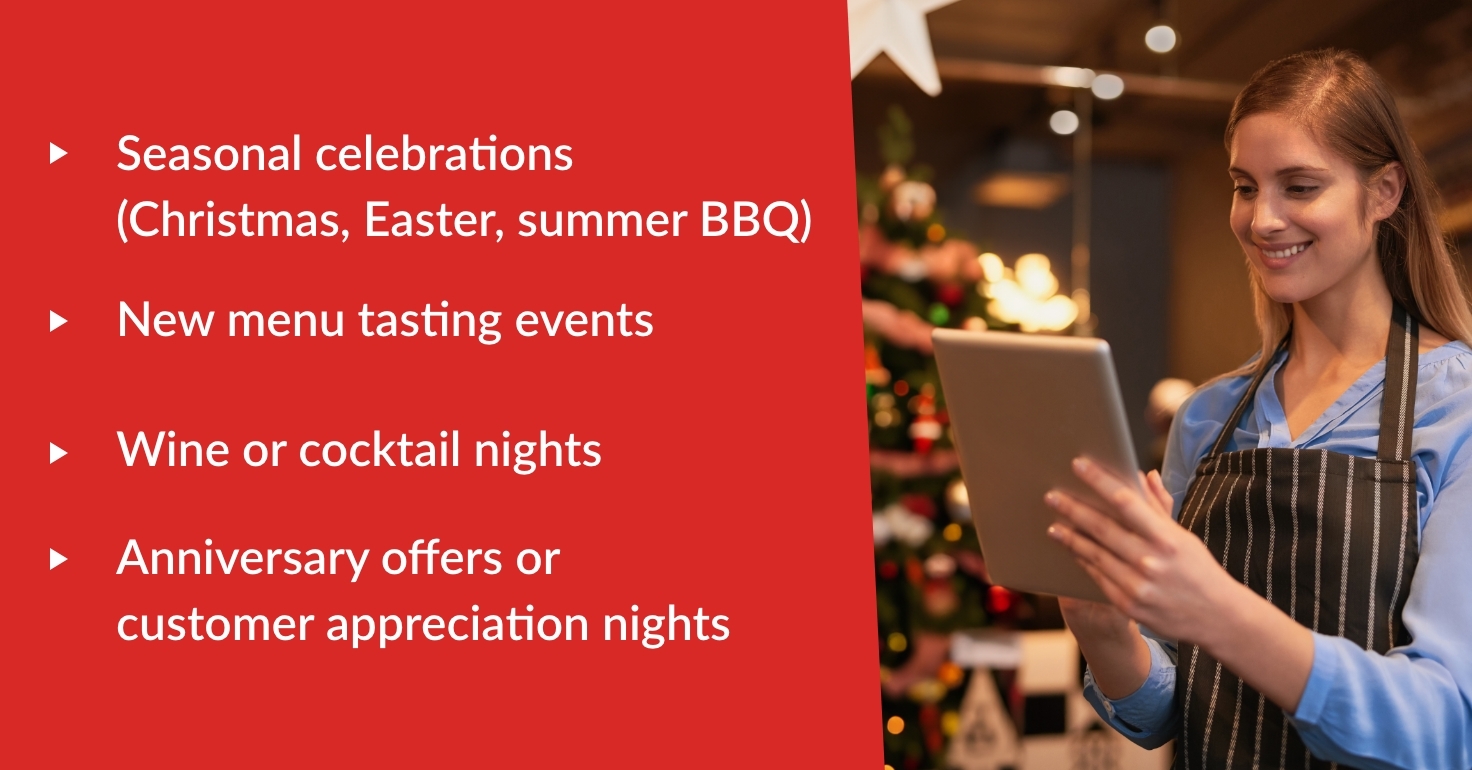
If you host events — themed nights, live music, holiday menus, tasting events — email is ideal to spread the word. One case study shows a restaurant launching a themed event by sending a clear, date-led invitation via email, with bold call-to-action buttons and compelling visuals.
Potential event ideas:
- Seasonal celebrations (Christmas, Easter, summer BBQ)
- New menu tasting events
- Wine or cocktail nights
- Anniversary offers or customer appreciation nights
Make sure emails have an unmistakable purpose, a clear date/time, and easy booking or reservation options.
5. Loyalty, Re-Engagement, and Reward Campaigns
Email helps maintain relationships with loyal customers. Use data from your bookings or restaurant POS system to target:
- Regular diners: offer loyalty perks like “buy 4 get 1 free” or “discount on your 5th visit.”
- Lapsed customers: send re-engagement mails offering a welcome-back discount or highlighting new items
- Frequent delivery users: offer a bundle deal or a free side on their next order
6. Email Newsletters with Value-Added Content
Not every email needs to be a sale or an offer. Monthly or quarterly newsletters can build brand connection by sharing:
- Stories from your kitchen - chef’s notes, dish inspirations, or sourcing stories
- Behind-the-scenes photos or videos
- Recipes or cooking tips for home chefs
- Updates on upcoming changes - new menu items, opening hours, special events
These build rapport, engage customers, and reinforce identity.
Restaurants report that newsletters strengthen loyalty and brand awareness even when they don’t directly generate bookings.
Best Practices for Restaurant Email Marketing
To get the most from your campaigns, follow these guidelines:
1. Make Your Design On-Brand and Mobile Friendly
Use consistent colours, fonts, logo placement, and tone across emails. Many subscribers check from mobile devices, so ensure your design is responsive and loads quickly.
2. Segment Your Audience
Don’t treat everyone the same.
Segment lists by frequency, order type (dine in, takeaway, delivery), dietary preferences, past events, or inactivity levels. Targeted emails perform significantly better than generic broadcasts.
3. Keep Subject Lines Clear and Action-Oriented
Use direct calls to action like “Book your Valentine’s dinner,” “Try our new summer menu,” or “Exclusive discount inside.” Avoid vague or overly generic headlines.
4. Use High-Quality Visuals
Food photography helps build appetite and interest. Clear, appetising images can drive click-through rates much higher than those of plain-text emails.
5. Monitor and Optimise Performance
Track open rates, click-through rates, unsubscribe rates, conversions, and revenue generated. Use the data to refine send times, messaging, visuals, and offers.
According to email marketing studies, continual optimisation is key to long-term results.
How Email Marketing Fits into a Wider Strategy
Email should not work alone. The most effective campaigns tie email with:
- Your POS / EPOS system: to know top customers, visit frequency, average spend, and trigger targeted campaigns (e.g. loyalty emails)
- Online ordering/takeaway system: to drive delivery or click-and-collect orders directly from email
- Social media and website: sign-up forms, reservation links, and cross-promotion
- Special events calendar: to plan event-based promotions well ahead of time
When email is integrated with your other systems, you turn it into a powerful engine for growth rather than a one-off marketing tool.
Conclusion
Email marketing is one of the most cost-effective ways to grow your restaurant in 2026.
When integrated with your POS, loyalty, and online ordering systems, it becomes a consistent revenue driver, not just a promotional tool. Automated, personalised campaigns help increase repeat visits, strengthen customer relationships, and support long-term, sustainable growth.
Book a demo with Foodhub and bring your ordering, marketing, and customer data together in one powerful platform - making it easier to turn every email into measurable revenue.