Restaurant marketing is not one-size-fits-all.
What works in New York does not automatically translate to Newcastle. While both markets share similar hospitality challenges, the way operators approach restaurant marketing, advertising, and overall strategies differ significantly between the UK and the US.
For UK operators looking to sharpen their approach, understanding these differences provides a useful perspective.
.png)
Different Markets, Different Pressures
The US restaurant industry operates at scale. Large chains, franchise models, and aggressive expansion strategies shape how marketing budgets are allocated. Brand awareness and rapid customer acquisition often sit at the centre of decision-making.
In contrast, UK restaurant marketing is typically more margin-conscious. Operators focus heavily on profitability, sustainable growth, and measurable return on investment.
This shift in mindset affects everything from tone of voice to channel selection.
Budget and Channel Focus
In the US, restaurant advertising often includes large paid social campaigns, influencer collaborations, radio spots, and strong promotional pushes. The aim is visibility and rapid reach.
UK restaurant marketing strategies tend to prioritise:
- Local search visibility
- Google and review management
- Targeted paid social
- Email and SMS retention campaigns
- Marketplace optimisation
- Direct ordering promotion
Rather than broad awareness, the focus is usually efficiency.
Delivery Platforms vs Direct Ordering
One of the clearest differences lies in how restaurants approach delivery.
US operators have historically leaned heavily into third-party platforms as growth drivers. While UK restaurants also use these platforms, there is a stronger awareness around commission impact.
As a result, many UK restaurant marketing strategies actively promote:
- “Order direct for better value.”
- Website-exclusive offers
- Loyalty rewards for app or website users
Marketing in the UK often serves a dual purpose: driving orders while protecting margins.
Tone and Brand Personality
Restaurant advertising in the US often leans bold. Campaigns are louder, more personality-driven, and highly promotional.
UK restaurant marketing typically feels more grounded. Messaging focuses on quality, value, trust, and consistency rather than high-volume hype.
This is not about better or worse. It is about audience expectation. UK customers respond well to transparency and steady value, while US audiences often engage with strong promotional energy.
Retention vs Acquisition Priorities
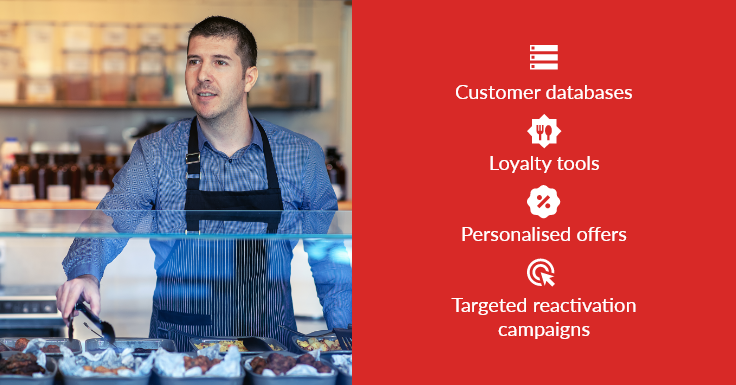
Retention plays a particularly strong role in UK restaurant marketing.
With tighter margins and higher operating costs, repeat custom is critical. UK operators are increasingly investing in:
- Customer databases
- Loyalty tools
- Personalised offers
- Targeted reactivation campaigns
In the US, acquisition often receives a larger share of marketing spend, particularly in competitive metropolitan areas.
Key Differences at a Glance
Here is a simplified comparison of how restaurant marketing approaches typically differ:
Focus Area | UK Approach | US Approach |
Budget Mindset | ROI-focused, efficiency-led | Growth-focused, scale-driven |
Delivery Strategy | Balanced with direct ordering push | Heavier reliance on third-party apps |
Campaign Tone | Value-driven, trust-focused | Bold, promotional, personality-led |
Retention Strategy | High emphasis on loyalty and repeat custom | Strong acquisition focus |
Data & Reporting | Increasing integration with POS and CRM | Widely adopted at the franchise level |
This table highlights a clear pattern: UK marketing is typically defensive and sustainable. US marketing is often expansive and aggressive.
What UK Restaurants Can Learn
There are lessons in both directions.
From the US model, UK operators can consider:
- Strengthening brand personality
- Creating larger promotional moments
- Investing confidently in digital visibility
At the same time, UK restaurants already excel at:
- Protecting margins
- Encouraging direct ordering
- Building long-term customer relationships
The most effective restaurant marketing strategies blend both mindsets: smart spending with confident positioning.
Final Thoughts
Restaurant marketing continues to evolve on both sides of the Atlantic. While restaurant advertising in the US often prioritises rapid expansion and brand amplification, UK restaurant marketing remains rooted in efficiency, loyalty, and long-term sustainability.
For UK operators, the goal is not to copy the US model, but to understand it. When you combine disciplined marketing spend with strong brand clarity and integrated systems, your marketing becomes more predictable, more measurable, and ultimately more profitable.
In today’s competitive environment, success does not come from shouting the loudest. It comes from knowing exactly where and how to invest your marketing effort.