Let’s start with a familiar moment.
You’re staring at your menu. Again.
Supplier prices have gone up. Again.
Staff costs have crept higher. Again.
And somewhere between your third coffee and mild panic, you’re wondering whether adding 50p to a dish will trigger a customer uprising.
Welcome to restaurant pricing in 2026.
But here’s the uncomfortable truth. The real problem isn’t pricing itself. It’s static pricing in a constantly shifting market.
Costs change monthly. Demand changes weekly. Customer expectations shift daily. Yet many restaurants still review pricing once a year and hope for the best. That gap is where margins quietly disappear.
Understanding the Pricing Strategy of a Restaurant
The pricing strategy of a restaurant isn’t just the numbers printed on your menu. It’s the thinking behind those numbers.
It must consider:
- Ingredient and labour costs
- Demand at different times of day or week
- Customer behaviour
- Competitor positioning
- Perceived value
Restaurant pricing is no longer a simple “cost plus a bit extra” calculation. It’s a strategic balancing act between rising food costs, labour pressures, delivery platform fees, and customer expectations, all while avoiding the risk of appearing too expensive.
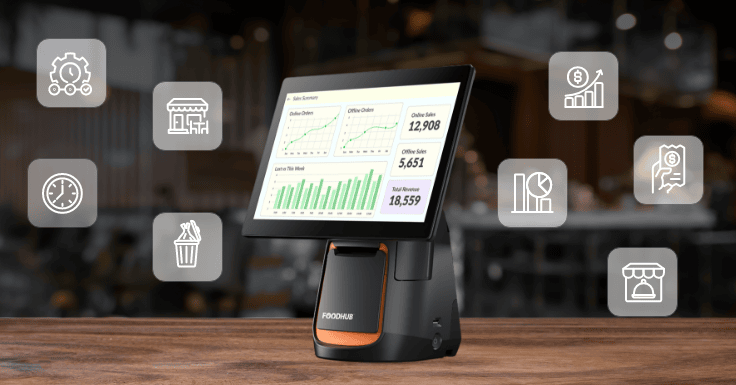
With a modern restaurant EPOS system, restaurants can analyse real-time sales data, identify trends, and adjust pricing more intelligently.
Pricing now shapes how customers perceive value, fairness, and even brand trust. It determines whether your restaurant feels premium, accessible, or overpriced.
Good pricing is intentional and proactive. Poor pricing is reactive; changes are made only after margins are already under strain. By then, recovery becomes harder, and profitability becomes unpredictable.
The Menu Pricing Methods Restaurants Still Rely On
Most restaurants still use one or more traditional menu pricing methods, often without realising it.
- Cost-Plus Pricing: Take the cost. Add a margin. Hope for the best.
- Competitor-Based Pricing: Charge roughly what the place down the road charges, even if their rent, staff, and menu are completely different.
- Psychological Pricing: Ending prices in .95 or .99 and pretending it makes no difference while still doing it anyway.
- Value-Based Pricing: Charging based on what customers are willing to pay, which is usually guesswork rather than measured.
These methods are not wrong. They are just limited in a world that no longer stands still.
Why Old Pricing Methods Are Under Pressure
The problem in 2026 is not pricing itself. It is static pricing.
Costs fluctuate. Demand changes. Channels behave differently. Yet menus often remain frozen for months. This is where margins quietly disappear.
Restaurants using outdated restaurant menu pricing strategies often find themselves:
- Underpricing popular dishes
- Over-discounting during quiet periods
- Absorbing cost increases instead of managing them
Margins do not vanish overnight. They leak.
Modern Restaurant Menu Pricing Strategies That Actually Help
Smart restaurant menu pricing strategies focus less on blanket price increases and more on structure.
This includes:
- Menu engineering to push high-margin items
- Strategic bundling
- Portion control that customers do not notice
- Anchoring prices to guide decisions
Done well, customers feel they are getting value. You quietly protect margins. Everyone wins. Done badly, social media lets you know.
Dynamic Pricing for Restaurants: Calm Down, It’s Not Surge Pricing
Let us address the phrase that makes people uncomfortable: dynamic pricing for restaurants. No, this does not mean charging double for chips because it is raining.
Dynamic pricing simply means adjusting prices based on:
- Time of day
- Demand
- Order channel
- Promotions
Examples already exist. Lunch menus. Early bird offers. Delivery pricing. These are all forms of dynamic pricing. We just did not call them that.
The key is transparency and moderation. Customers accept change when it makes sense.
Pricing Strategy for Restaurant Menu in 2026
A modern pricing strategy for restaurant menu planning looks at data, not gut feeling. Restaurants increasingly:
- Price dine-in and delivery differently
- Adjust promotions based on demand
- Review menu performance regularly
- Test small changes rather than big shocks
Pricing becomes flexible, not chaotic. The goal is to adapt without constantly explaining yourself.
The Mistakes That Quietly Destroy Margins
Some pricing mistakes do not look like mistakes at all. Common ones include:
- Leaving bestsellers underpriced for too long
- Discounting out of habit
- Treating every customer the same
- Ignoring menu performance data
Each decision feels small. Over time, they add up. This is how good restaurants struggle despite being busy.
How Often Should Restaurants Review Pricing?
Short answer: more often than most restaurants currently do, and on a routine schedule, not in response to a crisis.
An effective restaurant pricing strategy should include:
- Scheduled menu reviews (monthly or quarterly, depending on volume)
- Ongoing tracking of ingredient and supplier cost changes
- Monitoring demand patterns and best-selling items
- Gradual adjustments instead of sudden reactive increases
Pricing reviews should be part of your operational calendar, not emergency meetings triggered by shrinking margins. A well-used restaurant EPOS system makes this process far more structured and data-driven.
That said, there are clear signals that a review is needed sooner:
- A sudden drop in sales of specific dishes
- Noticeable shifts in customer ordering behaviour
- A new competitor opening nearby
- Supplier price spikes
- Rising delivery platform commission pressures
Strong pricing isn’t about constant increases. It’s about staying responsive before small margin leaks become major profitability problems.
Final Thoughts: Pricing is Not the Villain
Pricing is often blamed for slow sales, unhappy customers, or thin margins.
In reality, pricing is just a tool. In 2026, the restaurants that survive are not the cheapest. They are the clearest about their value. And yes, they still worry about changing prices. They just worry less than the ones who do nothing.