How Delivery Management Impacts the Full Customer Experience
For a delivery customer, the restaurant experience does not end when the food leaves the kitchen. It continues through every update, every minute of the wait, and the condition of the order at the door. A smooth delivery can reinforce confidence in the restaurant. A confusing or inconsistent one can overshadow the meal itself.
That is why delivery management should be viewed as part of the full customer journey, not simply a logistics task. The goal is not speed at any cost. It is a coordinated experience that gives staff better control and gives customers clearer, more reliable expectations.
Customers experience the process as one continuous interaction. They do not separate the ordering platform, kitchen, dispatcher, driver, and support response into different departments. If one part breaks down, the restaurant owns the result in the customer's mind. Strong delivery management helps those moving parts work together so the experience feels intentional from confirmation through completion.
Executive summary
For Delivery experience begins when the order is accepted, not when a driver leaves the restaurant.
Accuracy, realistic timing, kitchen-to-driver coordination, visibility, and issue resolution all shape customer trust.
The right delivery tools should fit the restaurant's current workflow and reduce complexity rather than create more of it.
What delivery management covers
Delivery management is the coordination of orders, people, timing, routes, status information, and final handoff after a delivery order is accepted. A food delivery management system may help a restaurant assign orders, provide directions, track drivers, capture proof of delivery, and review performance from one place.
It is related to, but not identical to, an order management system for restaurants. Order management may cover how orders enter and move through the restaurant; delivery management focuses on what happens as an order moves from the kitchen to the customer. When these workflows connect, staff spend less time re-entering information or piecing together an order's status across separate tools.
The exact workflow will vary. Some restaurants use their own drivers, some rely on outside delivery providers, and others use a mix based on volume or availability. The restaurant still needs a clear way to understand which orders are active, who is responsible for each delivery, and what the customer has been told. Technology should support that operating model rather than assume every restaurant delivers in the same way.
Accurate order handoffs protect the experience
A delivery can go wrong before it ever reaches the road. Manual re-entry, incomplete notes, unclear pickup status, or a missed item can create a poor experience that the customer attributes to the restaurant as a whole. A connected workflow helps the kitchen, counter staff, and driver work from the same order information.
That does not remove the need for a final accuracy check. It makes that check easier to perform consistently. The team can confirm the order, packaging, address, contact details, and special instructions before the handoff instead of trying to resolve missing information after the driver has left.
Realistic timing builds confidence
Customers often judge a wait by whether it matches the expectation they were given. A realistic delivery window can be more reassuring than an ambitious estimate that keeps changing. During a rush, managers need enough visibility to understand kitchen workload, driver availability, and active deliveries before making promises.
Clear status information also helps staff answer questions without guessing. When the team can see whether an order is waiting, assigned, on the road, or completed, they can give the customer a more useful response and intervene sooner if something is off track.
Consistency matters across ordering channels as well. If the website shows one estimate, a third-party platform shows another, and staff quote a different time by phone, the customer receives conflicting promises before the food is prepared. A defined process for setting and updating delivery expectations helps the restaurant communicate with one voice.
Kitchen-to-driver coordination protects food quality
The fastest route cannot make up for food that waited too long before pickup. Strong restaurant delivery management connects preparation and dispatch so the driver arrives close to the time the order is ready. That reduces time on the counter and helps food arrive closer to the condition the restaurant intended.
The workflow should account for more than distance. Preparation time, menu items, promised windows, delivery zones, and the number of stops all matter. Good delivery management gives the team information for balancing those factors instead of treating every order exactly the same.
Visibility makes the wait feel more manageable
A customer who does not know what is happening may call the restaurant for an update, especially when the original estimate has passed. Delivery management software can help managers and staff see progress without repeatedly calling drivers. Depending on the platform and ordering channel, customer notifications or live tracking may also be available.
Restaurants should confirm the difference between internal driver tracking and customer-facing tracking. Both can be valuable, but they solve different problems. Internal visibility helps the restaurant coordinate; customer-facing updates help set expectations and reduce uncertainty.
The quality of the message matters too. A useful update tells the customer what changed and what to expect next. Repeated generic alerts can create noise without providing reassurance. Restaurants should decide which milestones are meaningful, such as order accepted, driver assigned, order collected, and delivery completed, and make sure those statuses reflect what is actually happening.
The final handoff carries the brand to the door
For a delivery customer, the driver and the condition of the order may be the only physical interaction with the restaurant. Clear directions, gate codes, delivery notes, and contact information help support a smoother handoff. A well-managed food delivery service also gives the restaurant a clearer record if the customer reports that the order was late, damaged, or left in the wrong place.
Proof of delivery, timestamps, and status history do not eliminate complaints, but they make it easier to review what happened and respond fairly. When a problem occurs, a prompt, informed response can preserve more trust than a vague explanation or a long delay.
Service recovery should be part of the workflow
Even a well-run delivery operation will encounter traffic, difficult addresses, unavailable customers, damaged packaging, or a missed item. The customer experience depends on how quickly the restaurant recognizes the problem and how clearly it responds. Waiting for the customer to call may turn a manageable delay into a more frustrating interaction.
A connected delivery record gives staff a starting point. They can review the order, assignment, status history, driver notes, and proof of delivery before deciding what action is appropriate. The system does not replace judgment or a service-recovery policy, but it gives the team better information for applying that policy consistently.
Restaurants should define who owns the response, what situations require escalation, and how the outcome is recorded. That closes the loop between delivery operations and customer service. It also helps managers distinguish a one-time problem from a pattern that requires a change in staffing, delivery zones, packaging, or process.
What strong delivery management looks like behind the scenes
A more consistent customer experience usually begins with a more organized operating process. Useful capabilities may include:
one view of active, assigned, and completed deliveries;
clear order assignment and priority controls;
directions, addresses, and delivery instructions for drivers;
live order and driver status;
communication tools and proof of delivery; and
reporting that helps identify recurring delays or workflow gaps.
The most useful system is not necessarily the one with the longest feature list. It is the one staff can use reliably during a busy shift and that works with the restaurant's current ordering, POS, and driver processes.
Use delivery data to improve the experience over time
A single late order explains what happened once. A pattern of late orders can reveal where the operation needs attention. Delivery reporting may help restaurants review order volume, assignment activity, delivery times, unsuccessful deliveries, proof-of-delivery records, or recurring delays, depending on the system.
The most useful measures connect to a decision. If delays rise during one shift, the restaurant can look at preparation time, driver coverage, dispatch practices, and delivery radius. If customers frequently call after an order is dispatched, the team can review whether status information is accurate and whether notifications are available. If one neighborhood repeatedly creates long travel times, delivery-zone settings may need attention.
Data should be used as a diagnostic tool, not as an automatic conclusion. A longer delivery time does not always mean the driver caused the delay, and a completed status does not by itself prove that the customer received the experience intended. Combining delivery records with customer feedback and operational context gives managers a more balanced view.
How Foodhub supports a connected delivery workflow
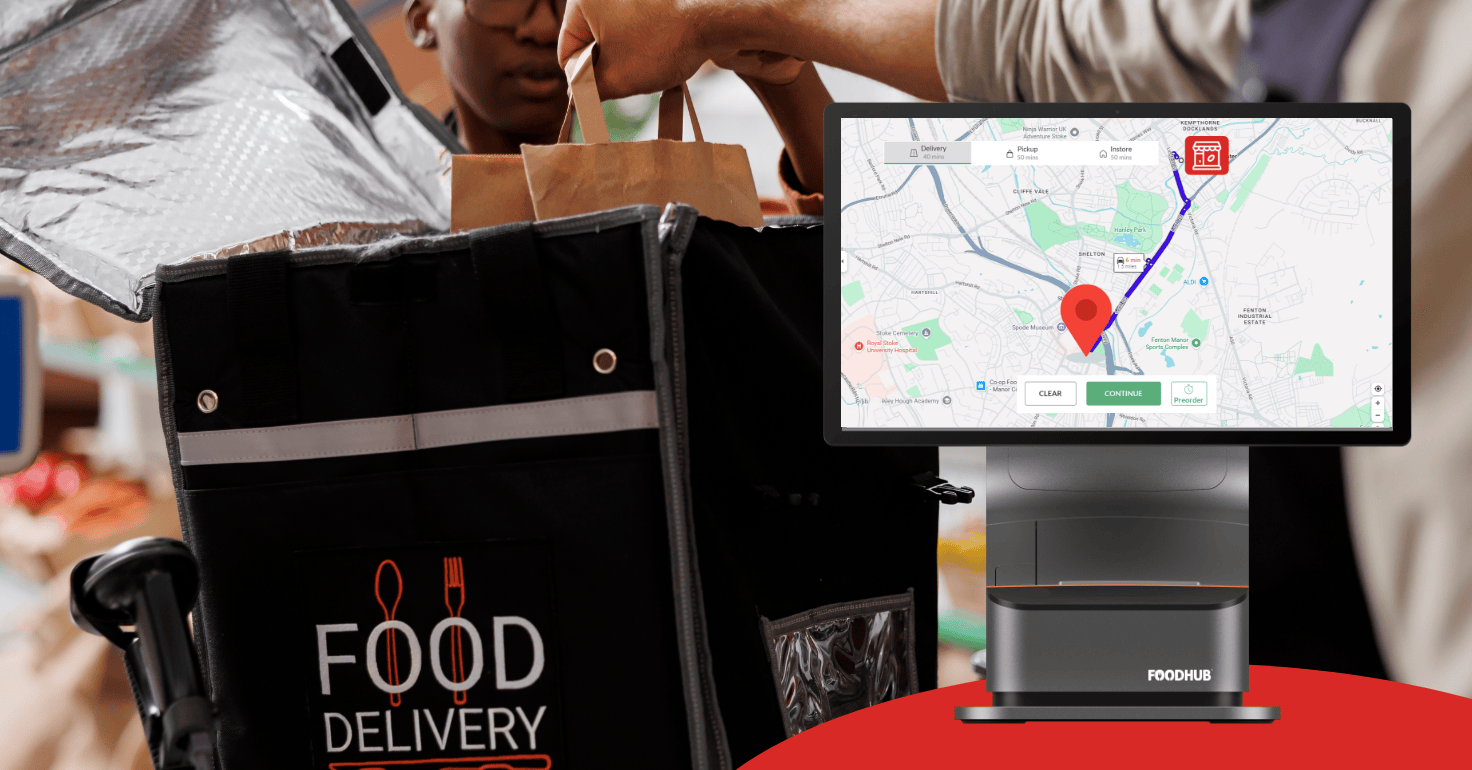
Foodhub's delivery management system is designed to help restaurants coordinate their own deliveries through tools for order assignment, directions, live tracking, driver communication, customizable delivery settings, proof of delivery, and reporting. Managers use a dashboard to monitor delivery activity while drivers receive order details through a mobile app.
Orders can be entered manually or through supported integrations, depending on the restaurant's setup. That matters because effective restaurant technology should connect the customer-facing experience with day-to-day operations without forcing unnecessary disruption. Restaurants should confirm the exact integrations, features, implementation requirements, and total cost that apply to their operation.
Choose around the experience you need to protect
Before comparing delivery platforms, map what happens today from order acceptance to the final handoff. Identify where staff lose time, where customers lose visibility, and where information must be entered or checked more than once. Then ask whether a proposed system improves those specific points.
Look at operational fit, ease of use, driver workflow, customer communication, integrations, reporting, support, and total cost. Also ask what must change during implementation. A practical transition plan is part of the customer experience because operational disruption can affect orders long before a new system is fully in place.
Speak with our team
Want to understand how delivery management could fit your current restaurant setup? Speak with the Foodhub team about your ordering channels, driver workflow, and day-to-day needs.