Choosing the right till system is one of the most important decisions a restaurant can make. It shapes how quickly orders move from the counter to the kitchen, how smoothly staff handle payments, and even how you keep track of stock and sales.
By comparing the Foodhub EPOS system with traditional POS setups, we help you understand the real differences so you can make an informed choice for your restaurant.
What Do We Mean by Traditional POS and Modern EPOS
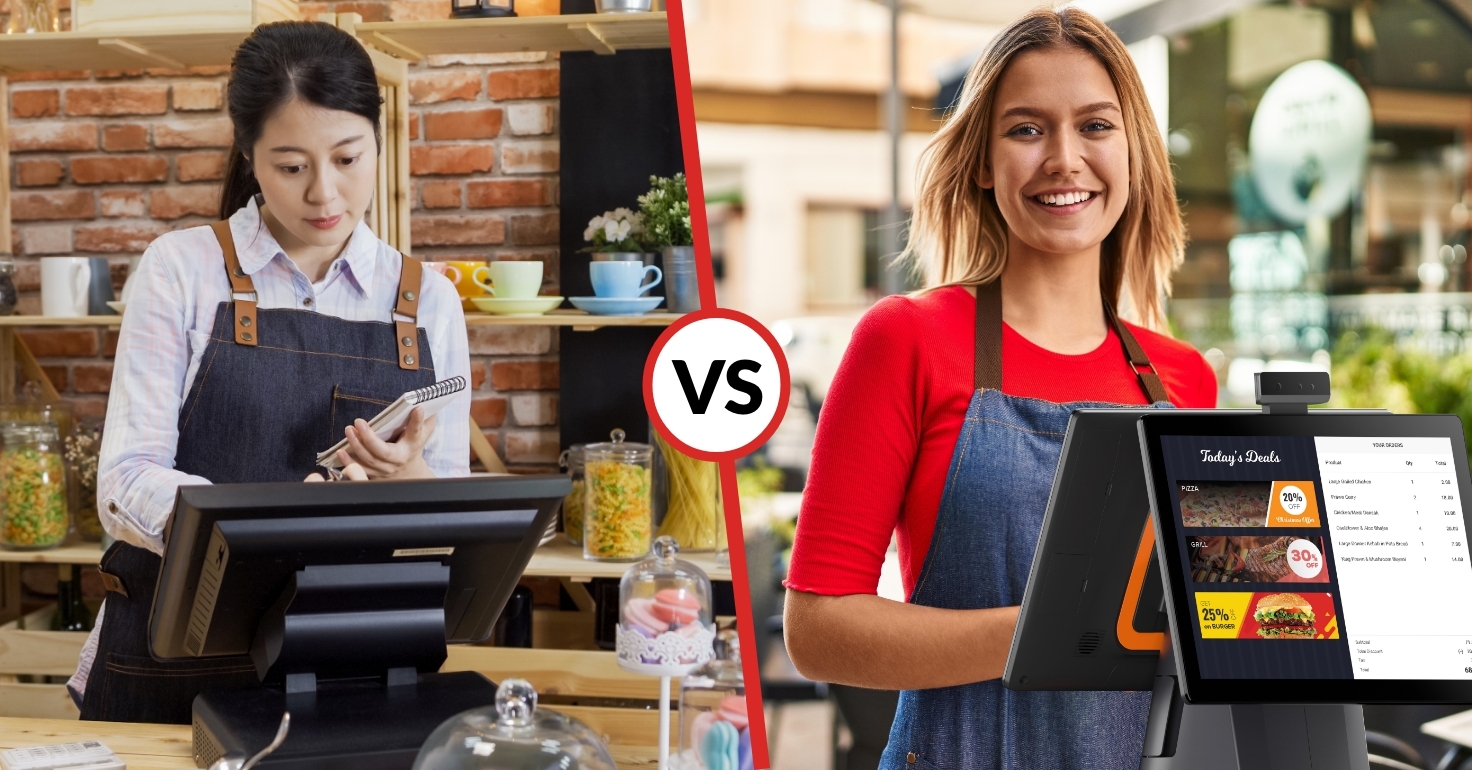
Traditional POS usually refers to older, on-premise systems. They often come with bulky hardware, run on local servers, and require a technician to update or fix them. They work, but they can be rigid and costly to maintain.
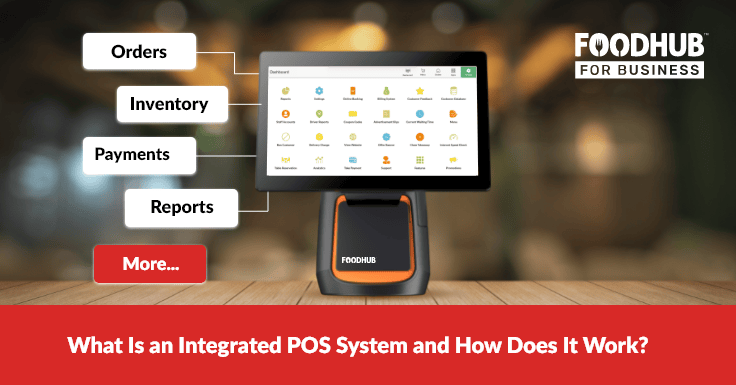
Foodhub EPOS system, on the other hand, is a modern cloud-based platform. It is designed with restaurants and takeaways in mind. It brings together ordering, payments, delivery, reporting, and customer management in one place.
Comparing the Two Systems
1. Installation and Setup
- Traditional POS: Needs heavy hardware and on-site installation, which can take days or even weeks.
- Foodhub POS system: Is cloud-based, so setup is quicker and simpler. You can be up and running in a much shorter time with less disruption.
Takeaway: If you want speed and less upfront hassle, modern cloud-based EPOS is the easier option.
2. Integrations and Channel Management
Traditional POS: offers limited integrations. Adding things like delivery apps or kiosks often needs custom work and extra costs.
Foodhub EPOS for restaurants: connects smoothly with online ordering, delivery apps, kiosks, and mobile apps. All orders feed into one dashboard, saving time and errors.
3. Reporting and Analytics
Traditional POS: gives you basic sales reports, usually at the end of the day. If you want more detailed insights, you often need paid add-ons.
Foodhub EPOS system: provides real-time dashboards, showing what is selling, when it sells best, and even how staff are performing.
4. Cost and Pricing Model
Traditional POS: can involve high upfront costs for hardware, plus licences and support fees. Unexpected charges for integrations or upgrades are common.
Foodhub POS system: uses a subscription model, so costs are easier to predict. You get updates included without extra charges.
5. Resilience and Offline Use
Traditional POS works locally, so it is not affected if the internet drops. But syncing data across sites can be complicated.
Foodhub EPOS for restaurants runs in the cloud but has an offline mode too. This means you can still take orders if your internet cuts out, and everything updates once you are back online.
Other Points to Think About
- Hardware: Traditional POS often locks you into specific terminals. Foodhub EPOS works on tablets, handhelds, and kiosks.
- Scalability: Opening a new site is faster and cheaper with EPOS.
- Support: Modern EPOS often comes with remote and quicker support options.
- Updates: Cloud systems are regularly updated without extra cost.
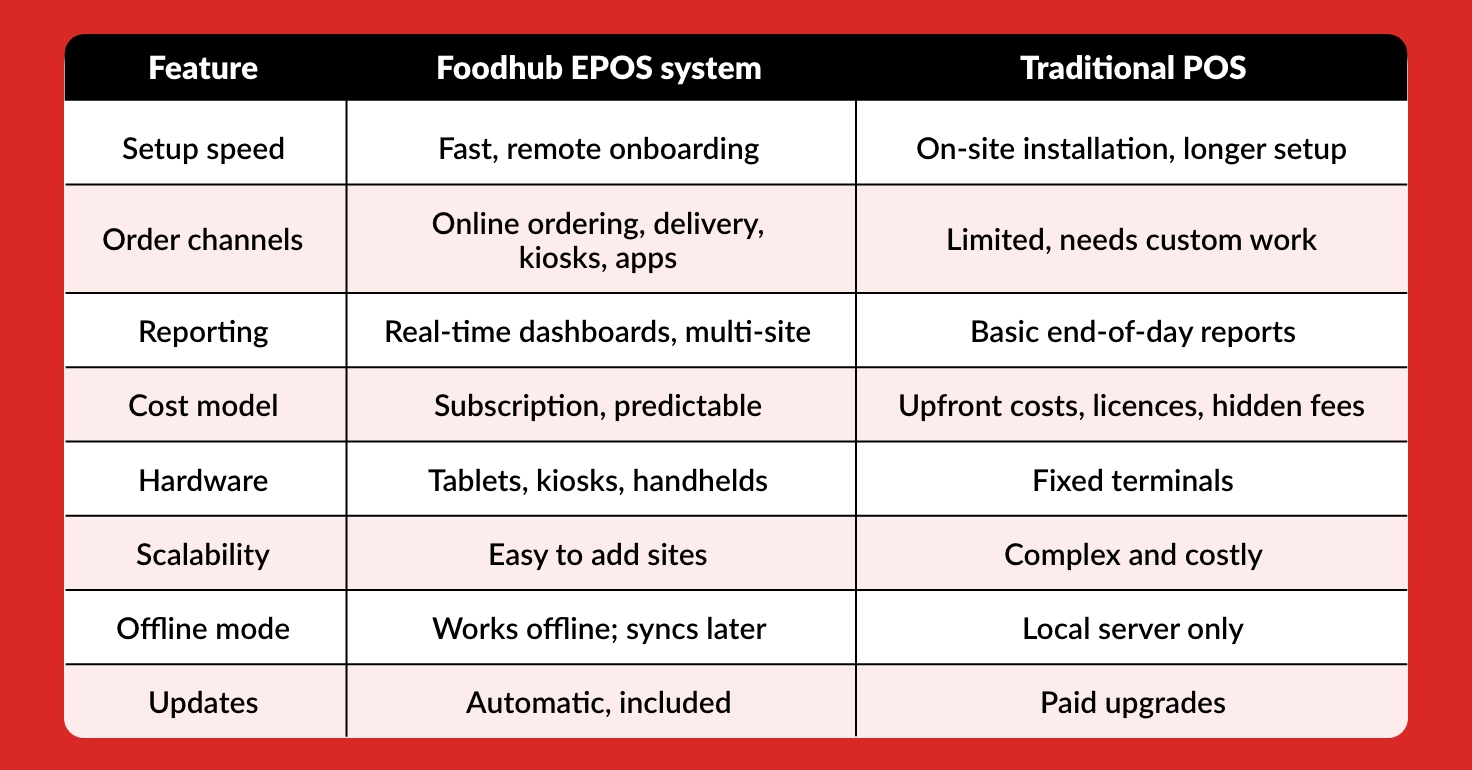
Foodhub EPOS Vs Traditional POS
Here’s a simple comparison you can use when evaluating suppliers:
Which One Should You Choose?
Traditional POS may still make sense if you:
- Have poor internet connectivity and no way to improve it.
- Already rely heavily on a legacy system.
- Need very specific features that only your current POS provides.
Foodhub EPOS system makes more sense if you:
- Want to handle online, app, and in-store orders in one place.
- Need simple, clear pricing without hidden costs.
- Plan to expand or add more sites.
- Rely on data for decision-making.
Traditional POS systems have served restaurants well for decades, but modern demands are different.
The Foodhub EPOS for restaurants is built to handle today’s challenges, from online ordering to delivery management. It helps reduce admin, makes reporting easier, and gives you tools to grow your business rather than just process payments.
Ready to Take the Next Step?
If you want to see how the Foodhub POS system could work in your restaurant, get in touch with us at Foodhub for Business. We will show you how it compares to your current setup, and how quickly you can start saving time and boosting profits.