What is a Restaurant Floor Plan? A Complete Guide
Starting a restaurant involves far more than picking out stylish chairs or finalising your menu. One of the most influential (and often forgotten) elements is your restaurant floor plan. Get the layout right, and your space feels effortless, customers move comfortably, staff glide between tables, and service runs like clockwork. Get it wrong… and suddenly your dining room feels like a maze and your team is sprinting around like they're training for the Olympics.
Whether you're opening a new venue or updating an existing one, understanding what a floor plan is and why it matters will save you a world of stress later. Here's everything you need to know.
What is a Restaurant Floor Plan?
A restaurant floor plan is simply a visual overview of how every part of your space is arranged. It shows:
- Where tables and chairs are positioned
- How customers and staff move through the venue
- Where service stations and POS terminals sit
- Kitchen layout, storage rooms, prep areas
- Entrances, exits, waiting zones, and customer toilets
- Back-of-house essentials like staff rooms and stock areas
Think of it as the master map that determines whether your restaurant feels calm and organised, or chaotic and cramped. A thoughtful floor plan supports efficient service, especially when paired with modern POS systems for restaurant operations.
Key Components of a Restaurant Floor Plan
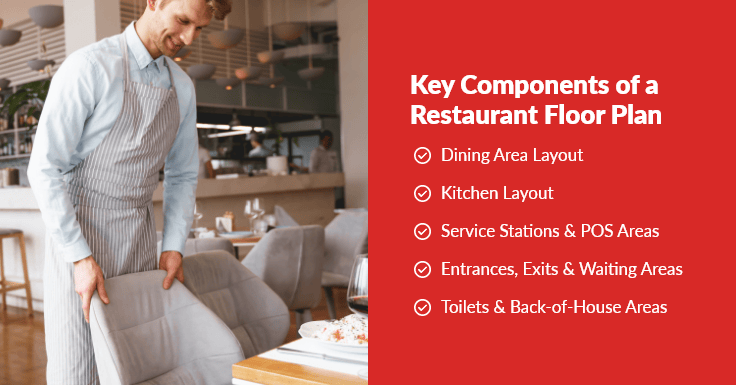
Every floor plan is unique, but the strongest ones always account for these core areas.
1. Dining Area Layout
This is the main attraction, so planning it properly is essential. Think about:
- Generous table spacing (comfortable, but not wasteful).
- Choosing between booths and chairs.
- Designing walkways so that staff can move through effortlessly.
- Ensuring the space is fully accessible.
A well-structured dining area prevents traffic jams, keeps the atmosphere comfortable, and helps service run smoothly, especially when the Friday rush hits.
2. Kitchen Layout
Your kitchen’s organisation determines how quickly food leaves the pass.
A good kitchen layout includes:
- Sensible prep zones
- Clear cooking lines
- Dedicated plating space
- Proper cold and dry storage
- Safe routes for staff to move without collisions
When your kitchen flows naturally, meals come out quicker, wastage drops, and your team stays far calmer than they would in a chaotic setup.
3. Service Stations & POS Areas
Where you place your tills and service points can make or break your workflow.
Modern POS software does much more than take payments; it links orders, stock levels, staff performance, and customer data. So, placing POS stations wisely means:
- Faster order taking
- Clear walkways
- Fewer bottlenecks
- Smooth, consistent service
If you're reworking your layout, always include your POS position in the early planning stages.
4. Entrances, Exits & Waiting Areas
Your entrance is your first impression.
It should:
- Feel open and easy to navigate
- Have clear signage
- Allow space for takeaway customers
- Keep waiting guests out of the way of seated diners
Nobody wants a queue hovering over their table while they're trying to enjoy dinner. A good entry layout prevents that awkward scenario entirely.
5. Toilets & Back-of-House Areas
They’re not glamorous, but they’re critical to your layout.
Plan for:
- Easy, logical customer access
- Hygiene-friendly routes
- Separate staff corridors
- Adequate storage in the right places
When staff can move around without clashing with customers, especially when carrying trays stacked with plates, the whole restaurant feels more professional and more relaxed.
Why Your Restaurant Floor Plan Matters
A strong layout isn’t just a design decision; it directly affects your restaurant’s performance.
A good floor plan contributes to:
- Faster, more efficient service
- Happier staff with shorter travel distances
- Higher table turnover
- A better overall dining experience
- Stronger compliance with safety standards
- More revenueis generated from the same square footage
In simple terms, a smart layout helps your venue run like a well-oiled machine.
Types of Restaurant Floor Plans
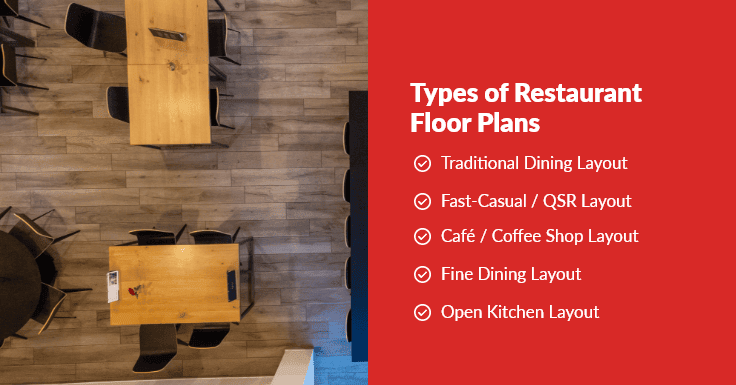
Your concept will shape your final layout. Here are common styles:
1. Traditional Dining Layout
Classic spacing and comfortable seating, ideal for pubs, bistros, and full-service restaurants.
2. Fast-Casual / QSR Layout
Designed for quick service: counter ordering, clear queue lines, and POS terminals placed upfront.
3. Cafe/Coffee Shop Layout
Flexible seating arrangements, relaxed atmosphere, and grab-and-go areas.
4. Fine Dining Layout
More privacy, elegant décor, and refined spacing to enhance the experience.
5. Open Kitchen Layout
Perfect for showcasing your chefs and adding visual theatre to the dining room.
How to Create a Restaurant Floor Plan (Step-by-Step)
Designing a floor plan doesn’t need to feel overwhelming. Here’s the simple process:
- Define your concept
- Measure your space accurately
- Sketch out customer flow
- Map staff movement
- Build your kitchen zones
- Place tables with correct spacing
- Decide where your POS terminals will sit
- Use floor plan software or a professional designer
- Test the layout before opening
Getting it right early prevents expensive changes later.
Common Mistakes to Avoid
Even the best operators slip up when designing layouts. Watch out for:
- Walkways that are too tight
- Lack of wheelchair access
- Not enough POS terminals
- Too many tables are squeezed into small areas
- Inefficient kitchen-to-table routes
- Ignoring staff workflow
Avoid these, and your future self will thank you.
Tools That Can Help You Build a Floor Plan
There are plenty of digital platforms that simplify layout design. These tools help you:
- Visualise table layouts
- Manage seating maps
- Track order flow
- Improve staff efficiency
And when your layout works hand in hand with POS systems groups, you gain real-time data that helps refine your operations even after opening.
Final Thoughts: Good Design Supports Great Service
.png)
Your restaurant floor plan forms the backbone of your entire business. Get the structure right, and your service becomes smoother, customers are happier, and your staff aren’t navigating an obstacle course every shift.
Pair smart planning with powerful POS software, and you’ll build a restaurant that’s efficient, organised, and ready for long-term success. Book a demo & start your free trial to see how effortless operations can be.