Restaurant Management Systems: A Comprehensive Guide to Streamlining Operations
In today’s hospitality world, running a restaurant isn’t just about great food and service. It’s a juggling act, managing staff, stock, sales, customer feedback, compliance, and more. If you’re doing this with separate tools or old-fashioned paperwork, chances are you’re wasting time, missing opportunities, and over stretching your team.
That’s why restaurant management systems have emerged as the backbone of efficient, scalable, and stress-free restaurant operations. With intuitive restaurant management software, you can modernise how your business runs, without losing the personal touch that makes your venue special.
What Exactly Is a Restaurant Management System?
At its simplest, a restaurant management system is a unified software platform that centralises key operational elements:
- Point‑of‑Sale (POS) transactions
- Inventory and stock control
- Staff rostering and payroll data
- Customer orders (dine‑in, takeaway, delivery)
- Reporting and analytics
Loyalty programmes and CRM integration
This system replaces multiple standalone tools, such as handwritten ledgers, invoicing software, and cash registers, with a single, cohesive solution tailored to your specific needs.
The Benefits of Deploying Restaurant Management Software
Adopting the right restaurant management software can transform how your business operates, making day-to-day tasks faster, easier, and more accurate. From the kitchen to the cash register, smart systems streamline workflows across your entire operation.
1. Less Manual Work, Fewer Mistakes
Automation handles repeatable tasks, such as inventory updates, order processing, and end-of-day reporting, so your team can focus on delivering service. It also eliminates errors that can erode profits, such as stock discrepancies or incorrectly entered transactions.
2. Clear Visibility Over Every Aspect
With live dashboards and real‑time analytics, you can see what’s happening in your kitchen, across orders, or on the service floor, even when you’re off‑site.
3. Smarter Stock Management
Your software learns your consumption patterns, detects shrinkage, and alerts you when to reorder. This means fewer over‑orders, less waste, and more control over food costs.
4. Efficient Staff Scheduling
You can use sales projections to inform rosters and ensure the right people are on shift—without overspending on labour or creating gaps in service.
5. Integrated Ordering Channels
All your dine‑in, takeaway, online, and delivery orders flow to one system. This prevents mistakes and saves the hassle of switching between apps and tablets.
6. Improved Customer Experience
With integrated loyalty, customer preferences, and feedback tools, you can personalise service—encouraging repeat visits and strong word‑of‑mouth.
Key Features to Look for in a Restaurant Management System
If you’re shopping for restaurant management software, here are the must-have capabilities you need to be looking for,
1. POS Integration
Your sales data should feed directly into inventory counts, kitchen screens, reports, and payroll.
2. Inventory Tracking & Purchasing
Real‑time stock levels, reorder suggestions, and category-wise shrinkage reports help you stay lean and profitable.
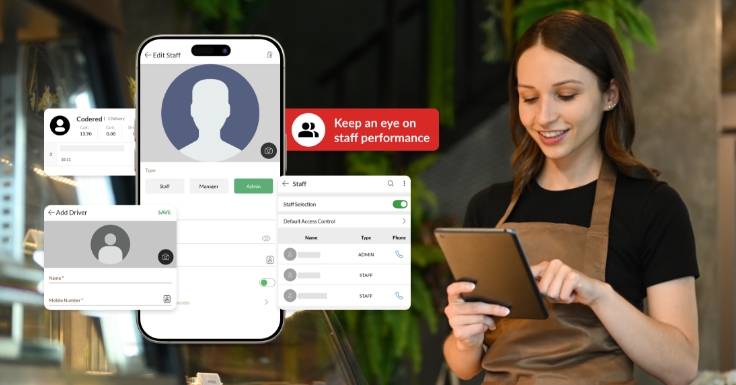
3. Staff Rostering & Performance
Built-in scheduling, shift checks, clock-ins, and individual performance tracking make staffing easier and more transparent.
4. Multi-Channel Order Handling
Whether it’s a counter customer, phone order, click & collect, or delivery—to a single app or multiple marketplaces—your system should manage it all.
5. Reporting & Analytics Tools
Knowing your sales by day/time/item, profit margins, busiest staff, and slow-selling dishes helps you fine-tune your menu and staffing.
6. Loyalty & CRM
Collect repeat visits with reward programmes, send personalised offers, and build lasting relationships with your customers.
7. Cloud Backups & Multi-Site Support
Manage menus, pricing, and promotions across locations, and make changes remotely—from your home, your restaurant, or on the go bus.
8. Simple Admin Interface
Your non-technical team should be able to manage menus, prices, promos, and journal entries without relying on support calls.
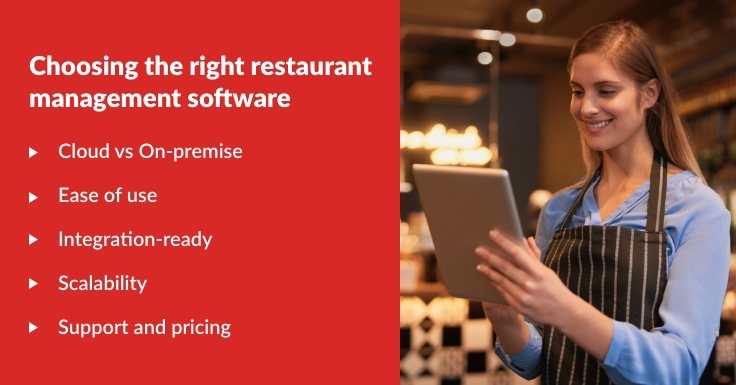
Choosing the Right Restaurant Management Software
Here are some important considerations:
- Cloud vs On-premise: Cloud systems are more flexible and update automatically. On-premise might be necessary for limited-internet venues, but it comes with backup risks.
- Ease of use: If your staff finds the system clunky, they won’t use it properly. Look for intuitive interfaces and short training cycles.
- Integration-ready: Pizza operators may want online ordering portals; fine-diners may want reservation systems. Your system needs to plug into your wider tech ecosystem.
- Scalability: If you’re growing, from pop-ups to brick-and-mortar, you’ll need support for additional POS terminals, locations, and kiosks.
- Support and pricing: Transparent pricing, from license fees to onboarding and training, is essential. Choose providers who offer support rather than surprise you with hidden charges.
The Real Cost of Sticking with Outdated Systems
Some operators get comfortable with spreadsheets, paper orders, and generic EPOS. But here’s what you’re missing:
- Manual errors in stock levels, menu pricing, or shift costs
- Lack of visibility—you don’t know what’s selling until the end of the day
- Fragmented systems force staff to juggle multiple tablets at once
- Inconsistent customer journeys, with no centralised loyalty or preference capture
By contrast, a good restaurant management system lets you streamline every function—reducing cost, increasing accuracy, and boosting customer satisfaction.
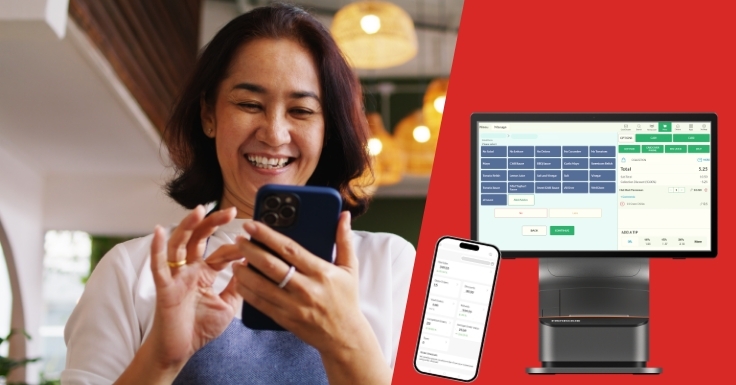
Foodhub: All-In-One Restaurant Management System
Foodhub’s platform bundles all the essentials into a single, integrated solution:
- EPOS for front-of-house
- Inventory management and stock alerts
- Multi-channel order processing
- In-house loyalty and promotional tools
- Reporting dashboards (sales, staff, popular items)
- Cloud access, multi-site control, and centralised admin
Also, we’re always upfront about costings. With Foodhub, you get a fair pricing policy, no hidden fees, and full support from our team to ensure you get the most value.
From Chaos to Control
Let’s say you're running a café with a busy lunchtime crowd and a steady early evening rush. Before Foodhub, you might:
- Record sales manually and reconcile days later
- Order too much milk one week and run out the next
- Trust your hourly report instead of checking food cost
- Keep loyalty stamps on paper, with no idea who’s coming back
With a modern restaurant management system, you can:
- See what’s selling in real time and manage opening hours accordingly
- Receive stock alerts and order ingredients on time
- Identify your most profitable menu items and staff performance
- Send targeted offers—“Enjoy 20% off your next coffee before 11 am”—to increase repeat visits
All enabled by data-driven tools that free you to spend time caring for customers, not spreadsheets.
Efficiency Doesn’t Mean Losing Personality
Every restaurant has its own vibe and values. A good restaurant management system doesn’t replace that; it enhances it.
By automating the routine, centralising operations, and empowering your team, you can focus on what matters: delighting guests, crafting great food, and building a place people love.
If you're ready to modernise your restaurant with smart, supportive technology, become a Foodhub partner and see how we can help you streamline and succeed without the fuss.
.png)