Can Restaurant POS Systems Integrate With Online Ordering Platforms? (Complete Guide)
Online ordering is no longer a “nice to have” for restaurants. For many, it’s one of the main revenue drivers. But taking orders online is only half the job. What really matters is how well those orders connect with your day-to-day operations.
That’s where the question comes in: Can restaurant POS systems integrate with online ordering platforms?
The short answer is yes. The better question is how well they integrate and what that means for your business.
This guide explains how a POS system with online ordering works, what integration looks like in practice, and why choosing the right setup can make or break your operations.
What is POS Integration with Online Ordering?
A POS system with online ordering means that orders placed through your website, app, or ordering platform flow directly into your POS without manual input.
Instead of staff re-entering orders from a tablet or phone, the system handles it automatically. Orders appear in the same place as in-store orders, using the same menus, prices, and rules.
A properly integrated restaurant POS system acts as the single source of truth for:
- Orders
- Payments
- Menus
- Reporting
How a POS System with Online Ordering Works in Real Life
Here’s what a fully integrated setup looks like in practice:
- A customer places an order online
- The order is sent instantly to the POS
- The kitchen receives it without delay
- Payment is recorded against the order
- The order is prepared, dispatched, or collected
- Data is logged automatically for reporting
No double handling. No switching between systems. No missed orders. This is the difference between “having online ordering” and actually running it efficiently.
Why Integration Matters More Than Ever
Restaurants that run online ordering separately from their POS often face the same issues:
- Orders missed during busy periods
- Staff juggling multiple screens
- Menu and price mismatches
- Reporting that doesn’t add up
- Increased risk of errors
A POS system with online ordering eliminates these friction points by keeping everything in a single workflow.
Key Benefits of a POS System with Online Ordering
1. Faster Order Processing
Orders placed online are automatically sent to the POS and reach the kitchen instantly. This eliminates manual entry, reduces wait times, and helps restaurants handle high order volumes more efficiently.
2. Reduce Mistakes
Because orders flow directly from the online platform into the POS, there is no need for staff to retype details. This significantly reduces errors in menu items, modifiers, quantities, and pricing.
3. Better Staff Efficiency
With automated order syncing, staff no longer need to monitor multiple tablets or devices. This allows teams to focus more on customer service, food preparation, and smooth restaurant operations.
4. Consistent Menus and Pricing
Menu updates made in the POS system automatically reflect across online ordering platforms and in-store menus. This keeps pricing, availability, and menu items consistent for customers everywhere.
5. Clearer Reporting
All order data, sales figures, and payment information are recorded in a single system. This makes it easier for restaurant owners and managers to track performance and make informed business decisions.
What to Look for in a POS Ordering System

Not all integrations offer the same capabilities. When selecting a POS system with online ordering, reviewing the available online ordering integrations and their functionality is essential. Look for the following key features:
- Native integration rather than basic syncing
- Real-time order flow (not delayed imports)
- Central menu and pricing management
- Support for delivery and collection workflows
- Reliable performance during peak hours
The goal is one system that works together, not multiple tools loosely connected.
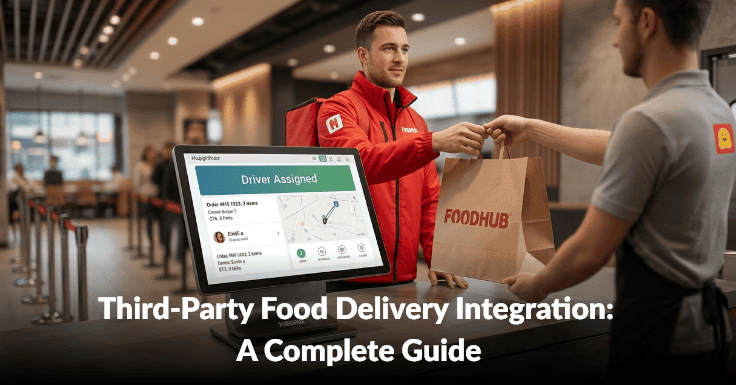
Does Integration Work with Third-Party Platforms?
Many restaurants use marketplaces alongside their own online ordering. A strong POS ordering system can integrate with:
- Restaurant websites and branded apps
- Online ordering platforms
- Selected third-party delivery channels
This keeps orders centralised while giving restaurants flexibility over where demand comes from.
Where Foodhub for Business Fits in
Foodhub for Business is built around the idea that online ordering and POS should not operate in silos.
Foodhub offers a POS system with online ordering that connects:
- EPOS
- Branded websites and apps
- Online ordering channels
- Delivery and dispatch tools
Orders placed online flow directly into the POS, using the same menus, pricing, and operational rules. Staff manage everything from one system, even during peak service.
With Foodhub for Business, restaurants benefit from:
- A fully integrated POS ordering system
- Centralised order and payment management
- Reduced reliance on multiple devices
- Reduce errors during busy periods
- Scalable online ordering without added complexity
It’s designed for restaurants that want control, efficiency, and consistency across every order.
Final Thoughts
Yes, restaurant POS systems can integrate with online ordering platforms. But the real value comes from choosing a system where integration is built in, not bolted on.
A well-designed POS system with online ordering helps restaurants:
- Serve customers faster
- Reduce operational stress
- Maintain consistency
- Scale online sales confidently
If online ordering plays a serious role in your business, the POS system you choose will directly impact performance.
See How It Works in Practice
Book a free demo with Foodhub and explore how a fully connected restaurant POS system can simplify online ordering and in-store operations.