What if your EPOS could do more than take orders and actually help you run the whole restaurant smarter?
Restaurant EPOS systems are often seen as order-taking tools. Staff enter the order, the kitchen receives it, the customer pays, and the receipt prints. Simple enough.
But modern restaurant EPOS systems are built to do far more than that.
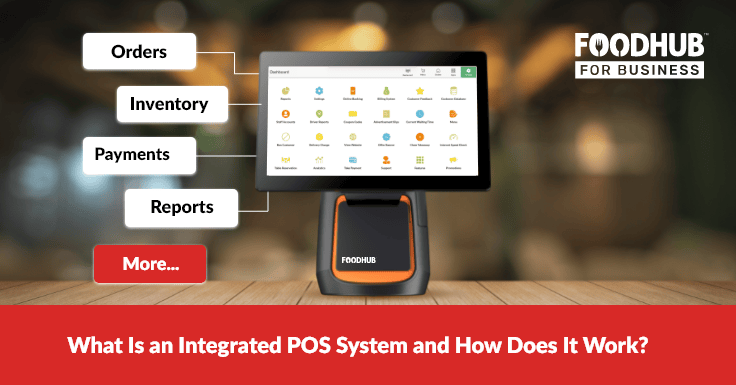
For restaurants, takeaways, QSRs, and hospitality operators, EPOS now works as a central operating system. It connects sales, stock, staff, delivery, kitchen workflows, online ordering, customer data and reporting. Instead of simply recording transactions, it helps restaurant owners understand what is happening across the business in real time.
Modern platforms such as the Foodhub EPOS system, along with other restaurant EPOS providers in the industry, are designed to support wider operational control.
The aim is not just to process orders faster, but to improve restaurant operational efficiency, customer experience, and long-term business growth.
Below, we break down what EPOS for restaurants can do beyond taking orders.
1: Multi-Channel Order Management
Summary
A modern EPOS helps restaurants manage dine-in, takeaway, delivery, collection, and online orders from one connected system.
Functionality
A restaurant rarely receives orders from just one place anymore.
Orders may come from the counter, tables, phone calls, websites, mobile apps, delivery platforms, or QR code menus. Without a connected system, staff can end up switching between tablets, screens, and handwritten notes. That is where mistakes happen.
A strong restaurant order management system brings those order sources into one workflow. Orders can be routed to the right preparation area, tracked by status, and linked with payment records.
Technical capability
Modern restaurant POS software can support:
- Order routing
- Order status tracking
- Table order management
- Takeaway and collection workflows
- Delivery order handling
- Modifier and special instruction capture
- Integration with kitchen printers or kitchen display systems
Business value
For restaurant owners, this means reduced missed orders, reduced manual entry errors, and smoother service during peak hours. When Friday night kicks off, your team should not be juggling five devices like they are running air traffic control.
2: Online Ordering Integration
Summary
Online ordering integration connects digital orders directly with the EPOS, reducing manual admin and improving order accuracy.
Functionality
Online ordering is now a core revenue channel for restaurants and takeaways. But when online orders are outside the EPOS, staff often have to enter them into the till or kitchen system manually.
That slows down service and increases the risk of mistakes.
With online ordering integration, orders from websites, apps, or third-party platforms can move directly into the restaurant EPOS system. This creates a cleaner workflow from customer checkout to kitchen preparation.
Technical capability
A connected EPOS can help manage:
- Website orders
- App orders
- Click-and-collect orders
- Delivery orders
- Customer payment confirmation
- Order acceptance and rejection
- Menu availability across channels
Business value
For operators, the benefit is control. Online orders are easier to track, staff spend less time retyping details, and reporting becomes clearer. It also helps restaurants manage multiple revenue channels without adding more operational chaos.
3: Inventory Tracking and Stock Control
Summary
EPOS systems can help restaurants monitor stock movement, reduce waste, and make better purchasing decisions.
Functionality
Stock control is one of the biggest profit leaks in hospitality. Too much stock leads to waste. Too little stock leads to disappointed customers and missed sales.
Modern restaurant EPOS systems can support inventory tracking by connecting sales data with stock usage. When menu items are sold, the system can help operators understand what ingredients or products are moving fastest.
Technical capability
Depending on the system, EPOS inventory tools may support:
- Stock level monitoring
- Low-stock alerts
- Ingredient-level tracking
- Product availability updates
- Supplier order planning
- Sales-linked inventory reports
- Waste and variance tracking
Business value
This helps restaurants plan purchases more accurately. For example, if chicken burgers always spike on Saturday evenings, stock levels can be adjusted before the rush. That is not just admin. That is margin protection.
4: Menu Management
Summary
EPOS allows restaurants to manage menu items, pricing, modifiers, and availability from a central system.
Functionality
Menus change constantly. Prices increase, dishes sell out, seasonal offers come in, and add-ons need updating.
If those changes are made manually across several platforms, errors are almost guaranteed. A restaurant menu management system helps keep menus more consistent across dine-in, takeaway, and online ordering channels.
Technical capability
Modern restaurant POS software can support:
- Item creation and editing
- Price updates
- Category management
- Modifiers and add-ons
- Meal deals and combos
- Item availability controls
- Channel-specific menus
- Tax and service charge settings
Business value
A central menu setup helps restaurants avoid selling unavailable items or displaying outdated prices. It also makes promotions easier to manage, especially for QSRs and takeaways that change offers regularly.
5: Kitchen Communication
Summary
EPOS systems improve communication between front-of-house, counter staff, kitchen teams, and delivery operations.
Functionality
Poor kitchen communication causes delays, mistakes, and stressed staff.
A modern EPOS can send orders directly to kitchen printers or kitchen display screens. Orders can be organised by preparation station, priority, order type, or fulfilment time.
Technical capability
Kitchen-focused EPOS features may include:
- Kitchen printer routing
- Kitchen display system integration
- Preparation status updates
- Order timers
- Special instruction visibility
- Item grouping by station
- Collection and delivery order separation
Business value
This helps kitchens work more efficiently. Chefs can see what needs making, staff can track order progress, and customers get a smoother experience. Less shouting across the kitchen. Fewer “who took this order?” moments.
6: Staff Management and Performance Tracking
Summary
EPOS gives owners better visibility over staff activity, shift performance, and operational accountability.
Functionality
Restaurants rely heavily on staff performance. Yet many owners only review overall sales without looking closely at how shifts actually run.
A modern EPOS system can support staff reporting by showing sales activity, order handling, voids, discounts, tips, and permissions by employee.
Technical capability
Staff management features may include:
- Employee logins
- Role-based permissions
- Clock-in and clock-out records
- Staff sales reports
- Void and refund tracking
- Tip management
- Driver performance reports
- Shift-based reporting
Business value
This helps managers make better rota, training, and accountability decisions. If one shift is consistently slower or has more order errors, the business can identify the issue and fix it properly.
7: Reporting and Analytics
Summary
EPOS reporting turns sales data into practical business insight.
Functionality
A basic till shows what was sold. A modern EPOS shows what that means for the business.
Good restaurant reporting and analytics can help owners understand sales trends, product performance, customer behaviour, and channel performance.
Technical capability
Useful EPOS reports may include:
- Daily, weekly, and monthly sales reports
- Best-selling items
- Low-performing items
- Sales by order channel
- Payment type reports
- Staff performance reports
- Discount and refund reports
- Customer ordering trends
- Peak trading times
Business value
This helps restaurant owners make smarter decisions. If reports show that a lunch deal performs well online but not in-store, the promotion can be adjusted. If a dish sells well but has a weak margin, pricing or portioning can be reviewed.
This is where EPOS becomes a decision-making tool, not just a sales recorder.
8: Customer Insights, Loyalty and Marketing
Summary
EPOS can help restaurants understand customers and encourage repeat business.
Functionality
Customer retention is crucial in hospitality. A modern EPOS can help restaurants collect and use customer data more effectively, especially when connected with online ordering and loyalty tools.
Instead of treating every order as a one-off transaction, restaurants can use data to build stronger relationships.
Technical capability
Customer and marketing features may include:
- Customer profiles
- Order history
- Loyalty points
- Discount codes
- Gift cards
- Customer segmentation
- Repeat order tracking
- Promotional campaign support
Business value
For example, a takeaway could send offers to customers who have not ordered recently or reward regular customers with loyalty discounts. This helps increase repeat orders without relying only on new customer acquisition.
9: Delivery Management
Summary
EPOS can support delivery workflows by helping restaurants track orders, drivers, and fulfilment status.
Functionality
Delivery adds extra complexity to restaurant operations. Orders need to be prepared, assigned, dispatched, and tracked.
Modern restaurant delivery management software can work with EPOS to improve visibility across the delivery process.
Technical capability
Delivery features may include:
- Delivery order tracking
- Driver assignment
- Estimated preparation times
- Delivery status updates
- Driver performance reports
- Collection and delivery separation
- Customer address management
Business value
For takeaways, this can reduce confusion during busy periods. Staff can see what is being prepared, what is ready, and what has left the restaurant. That means fewer delayed orders and better customer communication.
10: Business Scalability
Summary
Modern EPOS systems help restaurants grow by supporting more channels, devices, users and locations.
Functionality
A basic till may work for a small restaurant at the beginning. But as the business grows, the system needs to handle more complexity.
Scalable restaurant management systems can support additional devices, online ordering, delivery workflows, reporting dashboards, and sometimes multiple sites.
Technical capability
Scalable EPOS platforms may support:
- Multiple terminals
- Cloud-based access
- Multi-location reporting
- Centralised menu control
- User permissions
- Integration with third-party tools
- Online and offline functionality
- Remote business monitoring
Business value
This gives owners better control as the business expands. A takeaway adding delivery, a QSR opening another branch, or a restaurant launching online ordering all need systems that can grow with them.
How Foodhub for Business EPOS Fits into This Shift
Summary
Foodhub EPOS system supports the wider move from basic tills to connected restaurant management systems.
Modern EPOS platforms are becoming more operationally focused, and Foodhub EPOS fits into that shift. It is designed for restaurants, takeaways, and hospitality businesses that need a simpler way to manage daily operations without jumping between disconnected tools.
Rather than only helping staff take orders, the Foodhub EPOS system can support areas such as order handling, online ordering, payments, menu control, delivery operations, and reporting.
For a busy takeaway, that could mean managing walk-in, collection, and delivery orders more smoothly. For a QSR, it could mean faster service and clearer kitchen communication. For a growing restaurant, it could mean better visibility over what is selling, when customers are ordering, and where improvements can be made.
It also reflects where the wider industry is heading. Providers across the restaurant EPOS market are increasingly focusing on connected operations, real-time reporting, customer retention, and multi-channel order management.
For operators, the value is clear: less manual admin, better visibility, and more control over the business.
Final Thoughts
Restaurant EPOS systems have moved far beyond order taking.
Yes, they still help staff process orders and payments. But their bigger value lies in how they connect the wider business. A modern EPOS can support inventory tracking, menu management, kitchen communication, delivery operations, staff performance, customer loyalty, reporting, and online ordering integration.
For restaurant owners, takeaway businesses, QSRs, and hospitality operators, the right EPOS can improve operational efficiency and support smarter growth.
If your current system only helps you take orders, it may be worth asking what else it should be doing.
Ready to explore a smarter way to manage your restaurant? Speak with Foodhub for Business and learn how our system fits into your operation.