When a Takeout Outgrows Its POS System
A POS system, or Point of Sale system, is the combination of software and hardware that allows a takeout or restaurant to accept payments, manage incoming orders, and track sales data. It serves as the central hub for all business transactions and operational workflows in a modern food establishment.
According to the National Restaurant Association, off-premises sales including takeout and delivery now account for a significant majority of total industry traffic. As your business grows, a basic or legacy system may begin to fail under the pressure of high volume and multiple digital channels. You deserve a solution that scales with your success rather than acting as a bottleneck to your revenue.
The right technology allows you to process more orders in less time while reducing the stress on your kitchen and front-of-house staff. Upgrading to a modern, integrated platform can eliminate manual errors and provide the clarity needed to make informed business decisions. Let’s take a look at the signs that a takeout has outgrown its POS system—and what to do next to keep your growth on track.
What It Looks Like When a POS System Can’t Keep Up With Takeout Growth
Outgrowing your current technology is a gradual process that eventually results in a total operational slowdown. It usually starts when your order volume increases, but your speed of service stays the same or begins to decline.
Fragmented Workflows and Staff Friction
When a POS system is no longer sufficient, staff members often have to create "workarounds" just to get through a shift. For example, they might use handwritten notes to supplement digital tickets that don't include enough modifier detail.
This manual intervention increases the likelihood of mistakes and creates a stressful environment for the team. If your staff is spending more time fighting the technology than serving customers, the system has reached its limit.
Increasing Delays and Customer Complaints
Growth should lead to higher profits, but if your technology is outdated, growth often leads to longer wait times. Customers notice when a restaurant POS system is sluggish or when their digital orders aren't ready upon arrival.
Frequent complaints about accuracy or timing are strong indicators that your backend processes are broken. These issues often stem from a lack of synchronization between your various ordering platforms and the kitchen.
The Pressure of Peak Periods
The true test of any takeout operation is how it performs during a Friday night rush. If your system freezes or lags during high-traffic windows, you are losing money in real-time.
A system that works fine for ten orders an hour may completely fail when that volume triples. You need a platform built for high-concurrency environments to ensure your business stays profitable.
7 Clear Signs You’ve Outgrown Your Restaurant POS System
Identifying the early warning signs of an inadequate system can save you from a major operational crash. Most restaurant POS systems give off subtle clues that they are failing to meet the needs of a growing brand.
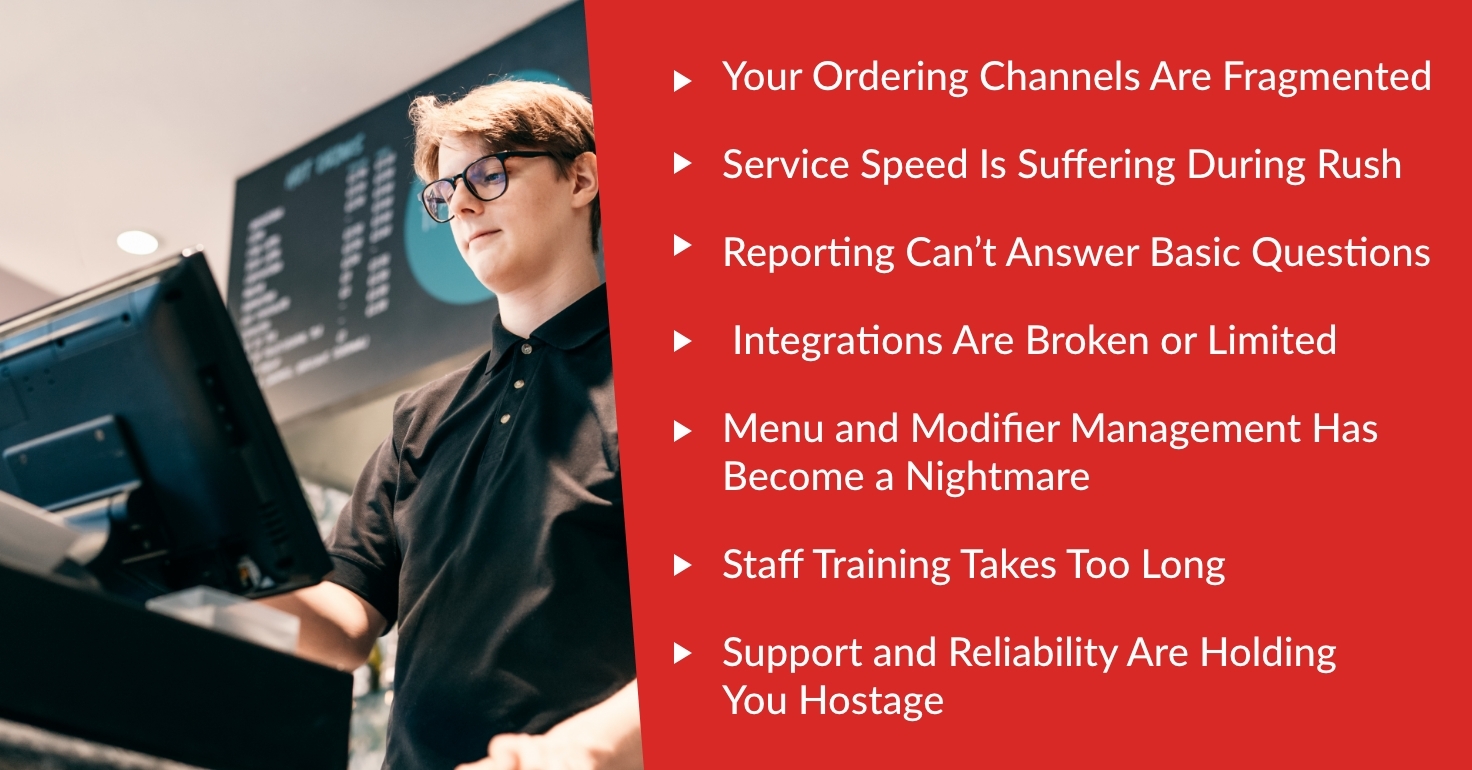
1. Your Ordering Channels Are Fragmented
A major sign of an outdated setup is the "wall of tablets" on your front counter. Each third-party delivery app having its own separate device indicates a lack of central integration.
When your POS system cannot ingest all orders into one dashboard, your staff must manually re-key every digital order. This extra step is the primary cause of missed orders and transPOSed delivery addresses.
Without a single source of truth, your manager cannot see the total order volume at a glance. This makes it impossible to manage kitchen pacing or staff levels effectively during the shift.
2. Service Speed Is Suffering During Rush
Speed is the core value proposition of a takeout business. If your checkout process requires too many taps or screens, your line will move slower than it should.
Legacy POS systems often struggle with slow ticket routing to the kitchen. A delay of even sixty seconds between the customer paying and the kitchen seeing the ticket can derail your efficiency.
If your kitchen is flooded with tickets and has no way to prioritize orders by when they’re due, your software is likely holding you back. Modern systems help control the flow of incoming orders so the kitchen can keep up during busy periods without sacrificing accuracy or food quality.
3. Reporting Can’t Answer Basic Questions
As you grow, you need more than just a "total sales" figure at the end of the night. You need to know which channels are the most profitable and which items are driving the most waste.
If you have to manually export data to a spreadsheet to see your takeout vs. delivery performance, your system is failing you. Managers should not have to spend hours reconciling reports from multiple platforms.
A lack of real-time data prevents you from making an informed decision regarding your menu or labor costs. If you cannot see your "prime cost" instantly, you cannot optimize your margins.
4. Integrations Are Broken or Limited
Modern POS technology relies on a web of integrations including loyalty programs, accounting software, and delivery platforms. If your current system doesn't "talk" to your other tools, you are losing valuable data.
Frequent outages in your online ordering link are a major red flag. When an integration breaks, it usually happens at the worst POSsible time, leading to lost sales and frustrated diners.
If your system requires manual updates to sync your inventory with your online menu, it is inefficient. Seamless integration is a requirement for any restaurant looking to scale in the digital age.
5. Menu and Modifier Management Has Become a Nightmare
Updating a menu item should be a simple task that takes less than five minutes. If you have to log into multiple systems just to change a price or temporarily remove an item from the menu, your setup is too complex.
Modifier logic often breaks when a basic POS system tries to handle complex takeout requests. If your system cannot handle "no onions, extra cheese, sauce on the side" consistently across all channels, it needs to be replaced.
Inconsistent pricing across your website and your in-store register creates customer distrust. A unified menu management system ensures your brand remains professional across every touchpoint.
6. Staff Training Takes Too Long
In an industry with high turnover, your restaurant POS software must be intuitive and easy to learn. If a new hire needs three days of training just to ring up a burger, the interface is too complicated.
Modern systems use "conversational ordering" and visual prompts to guide the user through the process. This reduces the cognitive load on the employee and virtually eliminates entry errors.
If your staff continues to make the same mistakes despite training, it is often a design flaw in the software. You need a system that makes it hard for your team to get the order wrong.
7. Support and Reliability Are Holding You Hostage
Frequent downtime is the ultimate sign that you have outgrown your current POS provider. Every minute your system is offline is a minute you are not making money.
If your hardware is constantly breaking or your software is laggy, your business is at risk. Slow performance during peak hours is a quiet profit killer that drives customers to your competitors.
Furthermore, if your support calls go to an unhelpful call center, you lack a true partner in your growth. You need a provider that offers 24/7 human support to resolve issues as they happen.
Why Takeout Growth Puts More Stress on POS Systems Than Dine-In
The logistics of takeout and delivery are much more demanding than a traditional sit-down dining room. Off-premises orders require a higher degree of coordination and data accuracy.
Shorter Decision Windows and Higher Volume
In a dine-in environment, guests spend more time at the table, which gives the kitchen a more predictable pace. Takeout customers expect their food to be ready in fifteen to twenty minutes regardless of how many orders are in the queue.
This puts immense pressure on your POS system to handle rapid-fire transactions. The software must be able to route dozens of tickets to various kitchen stations simultaneously without crashing.
Coordination of Pickup and Delivery Timing
A takeout order involves a complex handoff between the kitchen, the front counter, and the customer or driver. Your system must provide clear status updates so the staff knows which bags are ready for which people.
Without this visibility, orders get mixed up, and drivers wait longer than necessary. This coordination is something that traditional POS systems were never designed to handle.
Higher Frequency of Payment Disputes and Refunds
Off-premises orders are statistically more likely to result in a refund request due to missing items or delivery delays. Your POS software must make it easy to process these adjustments without breaking your daily audit.
If your current system makes it difficult to track "why" a refund was given, you cannot fix the underlying operational issues. Modern systems provide granular data on voids and remakes to help you reduce food waste.
What to Look for in a POS System Built for Modern Takeout
If you have determined that your current setup is inadequate, your next step is to evaluate modern POS systems. Focus on features that prioritize speed, integration, and data clarity.
Unified Multi-Channel Ordering
The most important feature is the ability to ingest orders from your website, mobile app, and third-party delivery platforms into one place. This POS integration eliminates the need for manual re-entry and reduces labor costs.
One screen should show you every active order, regardless of its source. This allows your manager to control the entire flow of the restaurant from a single point of truth.
Reliable Kitchen Routing and KDS Integration
A kitchen display system (KDS) is often superior to paper tickets for high-volume takeout. It allows you to see "time since ordered" and helps the kitchen prioritize tickets based on pickup times.
Ensure the system allows for custom routing rules. For example, cold drinks should be routed to a different station than hot fries to ensure every part of the order is fresh at the handoff.
Cloud-Based Performance and Offline Mode
A cloud based POS system allows you to access your data from anywhere in the world. You can check your sales, update your menu, or view your labor costs from your phone while away from the shop.
However, you must also ensure the system has a robust "offline mode." If your internet goes down, your POS hardware should still be able to process transactions and print kitchen tickets until the connection returns.
Granular Reporting by Channel
You need to see exactly how much you are spending on delivery apps versus how much you are making from them. Your reports should break down your sales by channel, daypart, and even specific menu categories.
This data allows you to see which platforms are actually worth the commission fees. It helps you decide whether to focus more on your own branded website to improve your overall profit margin.
How to Upgrade Without Disrupting Service
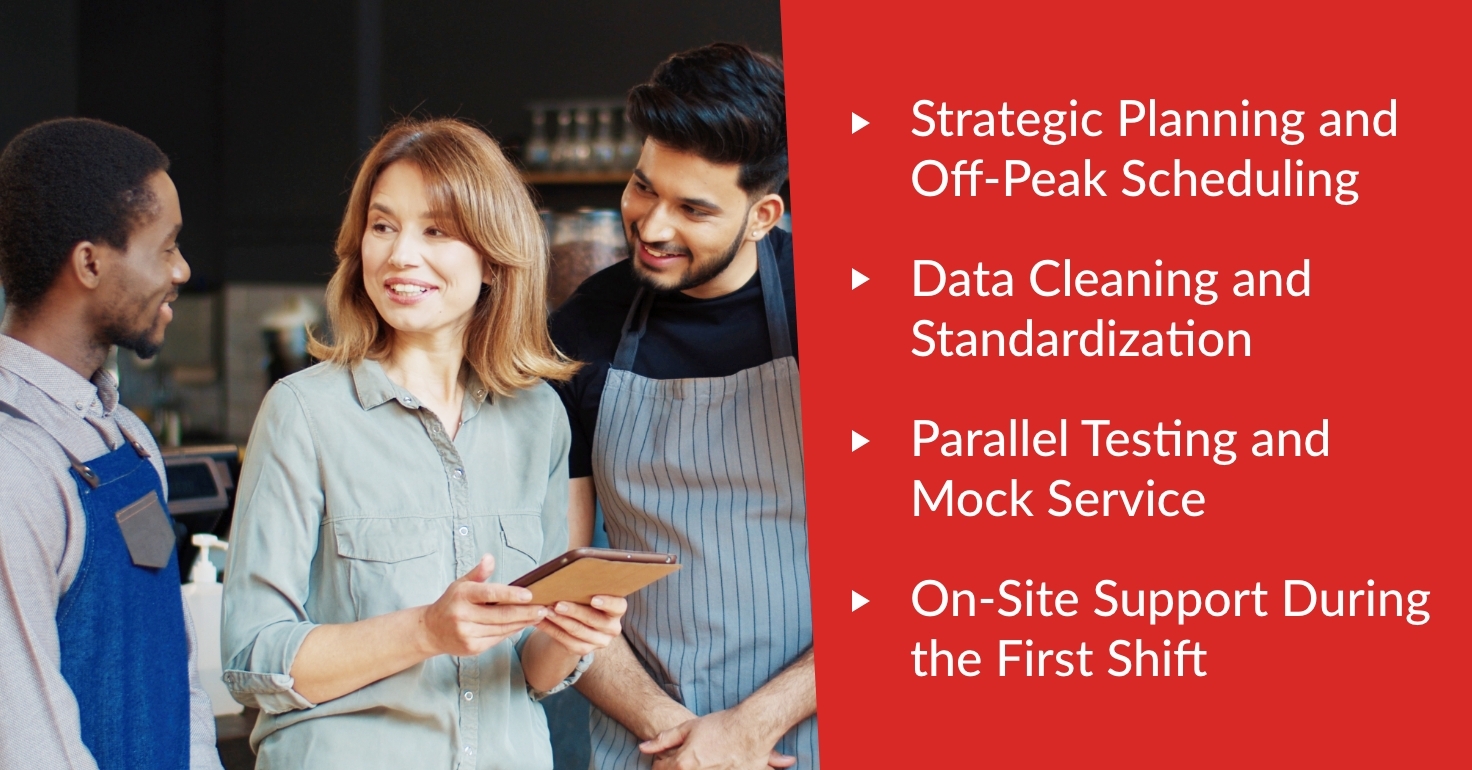
The fear of downtime often prevents restaurant operators from switching to a new POS system. However, a well-planned migration can be completed with minimal impact on your daily service.
Strategic Planning and Off-Peak Scheduling
Never attempt a POS swap during your busiest hours. Schedule the installation and training for your slowest day of the week, typically a Monday or Tuesday morning.
Build a clear timeline that includes data migration, hardware setup, and staff training. Assign a single point of contact within your team to lead the transition and work with the POS provider.
Data Cleaning and Standardization
Before moving your menu to a new POS system, take the time to clean up your data. Remove "dead" menu items and ensure your modifier groups are logical and consistent.
Standardizing your menu before the transfer makes the new system much easier to use from day one. It also ensures that your historical data will be clean and actionable moving forward.
Parallel Testing and Mock Service
If possible, set up the new system in a "test" mode while your old system is still running. Enter real orders into the new system to see how the tickets print and how the kitchen reacts.
Running a "mock service" with your staff helps them get familiar with the interface without the pressure of a real customer. This practice build confidence and reduces the chance of errors during the live launch.
On-Site Support During the First Shift
Ensure your vendor provides on-site or high-priority remote support during your first live shift. Having an expert available to answer quick questions prevents small glitches from becoming major service delays.
Most staff members will master the basics within the first four hours of use. A successful launch sets the tone for a long-term improvement in operational efficiency.
Quick Self-Assessment: Is It Time to Switch?
If you are unsure whether your business has outgrown its current technology, ask yourself these four questions. If you answer "yes" to more than two, it is time to look at a modern POS system.
Are you losing orders or remaking food weekly? Manual entry and fragmented systems lead to expensive errors that eat your profit.
Do managers spend hours reconciling reports? Your technology should save you time, not create more administrative work.
Are you using multiple tablets just to survive a shift? This is a sign of poor integration and high labor waste.
Are guests complaining about delays or accuracy? Customer satisfaction is the ultimate measure of your technology's effectiveness.
Future-Proof Your Takeout Business
As the restaurant industry continues to shift toward digital ordering, your POS system will become the most important tool in your arsenal. Outgrowing your current software is a natural part of business expansion, but staying with an inadequate system will eventually lead to stagnation. By upgrading to a unified, cloud-based platform, you provide your team with the tools they need to maintain high service standards and grow your brand.
The transition to a modern POS system is an investment in your restaurant's future. It allows you to recapture lost time, reduce manual errors, and better understand your customer preferences. When your technology works in harmony with your kitchen, you can focus on providing the great food and service that made your business successful in the first place.
Foodhub for Business is dedicated to making the food industry simple for our 30,000+ restaurant partners. Our all-in-one ecosystem provides the reliability and integration needed to handle high-volume takeout and delivery without the stress. We provide the smart technology that helps you reach more customers and increase your profits.
Don't let an outdated platform hold back your growth. Book a demo with Foodhub today to see how our POS system can help you manage your takeout operation with total confidence and efficiency.